
What if a landlocked African nation could become the Switzerland of its continent? I believe Ethiopia is moving in that direction. This isn’t about copying Europe but about adapting a proven strategy: turning mountainous geography and the absence of a coastline from limitations into long-term strength.

Picture Switzerland. A country once defined by isolated valleys drilled through its mountains to create transit corridors, converted water into hydroelectric power, and used its location to anchor diplomacy and commerce across Europe. Geography became a foundation, not an obstacle.
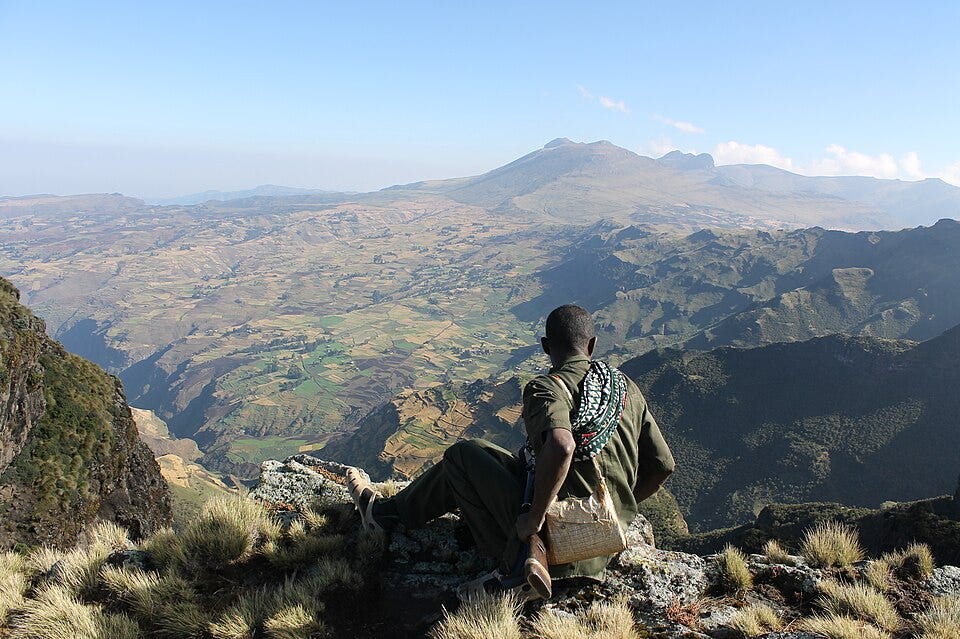
Now look at Ethiopia a country of 426,000 square miles. Its highlands — a rugged plateau more than twice the size of California — feed most of the Nile. It has no port, but it controls the river’s headwaters. Addis Ababa serves as the seat of the African Union, much as Geneva hosts international agencies. And the Grand Ethiopian Renaissance Dam is its effort to turn water into regional power, reliability, and connectivity.
The parallel is clear. The question is less about whether Ethiopia will be influential and more about how it will use this Swiss-style approach to shape a stronger, more connected future for the Horn of Africa.
Water into Power: The Grand Ethiopian Renaissance Dam (GERD)
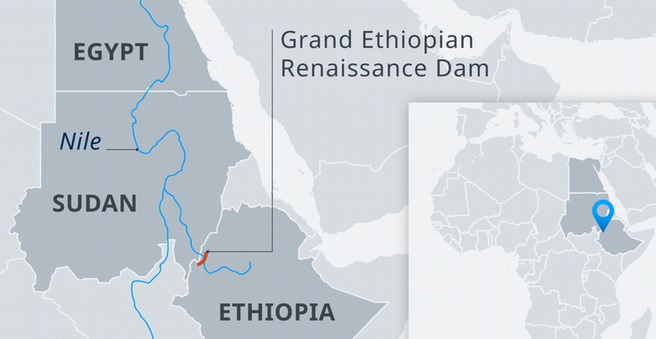
Alexander Hamilton once wrote that “the wealth of nations depends upon an infinity of causes.” For Ethiopia, that calculus begins with water. Roughly 85 percent of the Nile that reaches Egypt originates in Ethiopia’s highlands. For generations, that resource flowed out of the country without control or benefit. The GERD changes that dynamic.
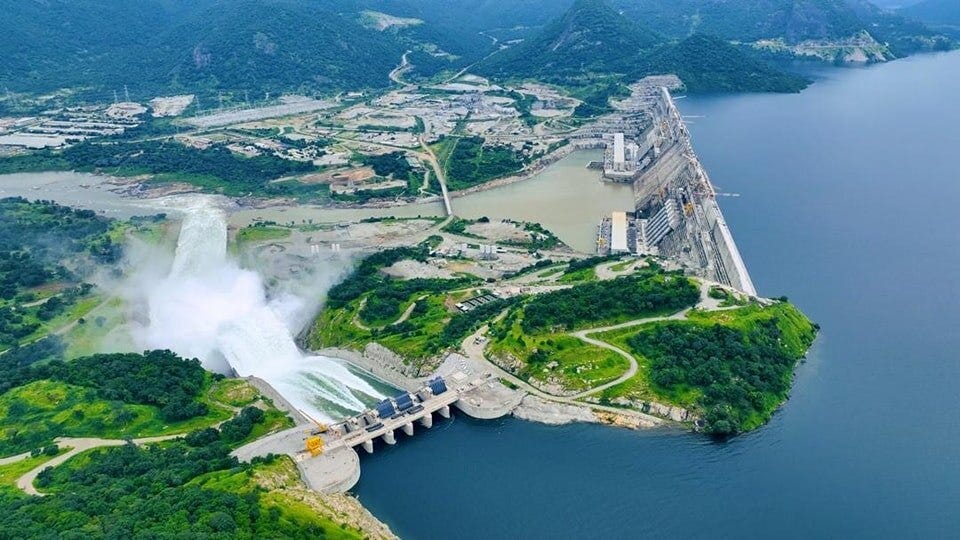
Designed to generate more than 6,000 megawatts, the dam aims to eliminate Ethiopia’s chronic power shortages and create a surplus for export — similar to how Switzerland’s hydropower stabilizes grids across Europe. The parallel is straightforward: two landlocked, mountainous nations using topography to become regional energy anchors.
But the comparison has limits. Switzerland’s dams don’t sit on a geopolitical fault line. The GERD does.
Egypt views Ethiopia’s upstream control as an existential threat—the Nile isn’t just a river to Egypt; it is the country’s source of life. Without the Nile, there would be no Egypt at all. The same way the Colorado River shapes the American Southwest, the Nile shapes Egypt’s very existence—a parallel I explored in my article on water scarcity.
The parallel is instructive, but the stakes on the Nile are higher. This is not an internal dispute but a negotiation between sovereign states. And the lesson is the same: past entitlements cannot hold in a changing climate. Transparent data-sharing, coordinated drought planning, and structured agreements are essential.
Ethiopia’s opportunity is enormous, but the diplomatic path is narrow. The GERD’s long-term success will depend as much on institutions — predictable rules, credible diplomacy, and sustained cooperation — as on the engineering itself. World Bank governance indicators help explain the stakes. Ethiopia’s scores for political stability, rule of law, and government effectiveness all sit below 40 out of 100 — a reminder that hydropower creates capacity, but institutions determine whether that capacity becomes trust, investment, and durable growth.
Neutrality into Influence: Addis Ababa’s Quiet Clout
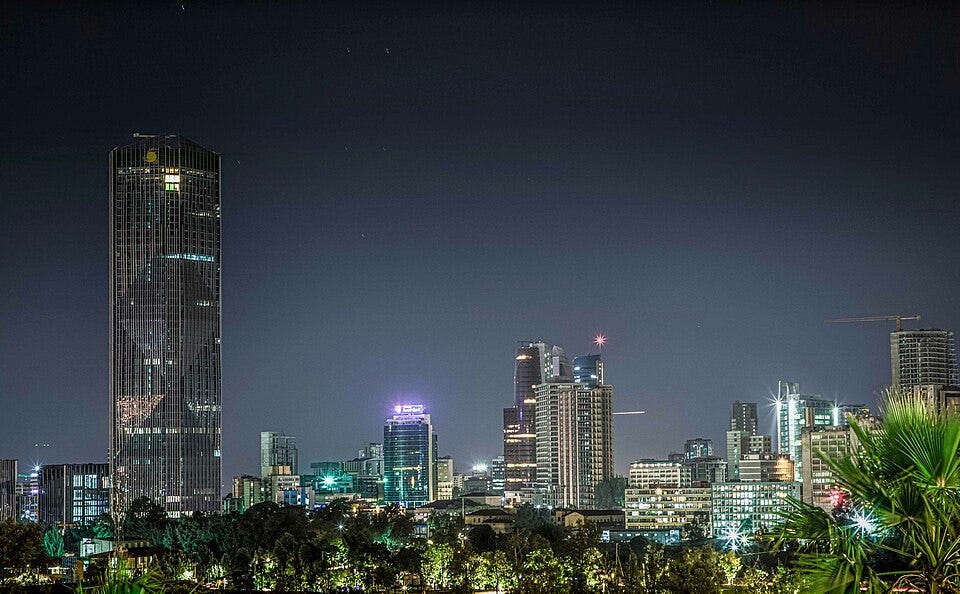
Switzerland hosts the United Nations in Geneva. Ethiopia hosts the African Union and the UN Economic Commission for Africa in Addis Ababa — roles that give a landlocked nation an outsized diplomatic voice, built not on neutrality, but on its central location and political will.
But here the Swiss model meets a hard reality. Switzerland built its reputation over two centuries of relative peace. Ethiopia has faced a decade marked by civil war, political fragmentation, and border tensions. The Nile’s flow is predictable; Ethiopia’s politics are not.
Yet Ethiopia holds a powerful asset: a legacy of sovereignty. Its victory at the Battle of Adwa in 1896 — a rare African defeat of a European empire — and its status as a nation never fully colonized have forged a deep national confidence.
That confidence will matter, because Ethiopia’s long-term success hinges on stable relations with its neighbors, especially Egypt. The real test of the GERD is not its engineering, but the diplomacy it demands. Ethiopia’s relationship with Egypt will ultimately show whether regional cooperation can rise above zero-sum thinking.
How Ethiopia’s Electrified Rail Corridor Is Reshaping East Africa
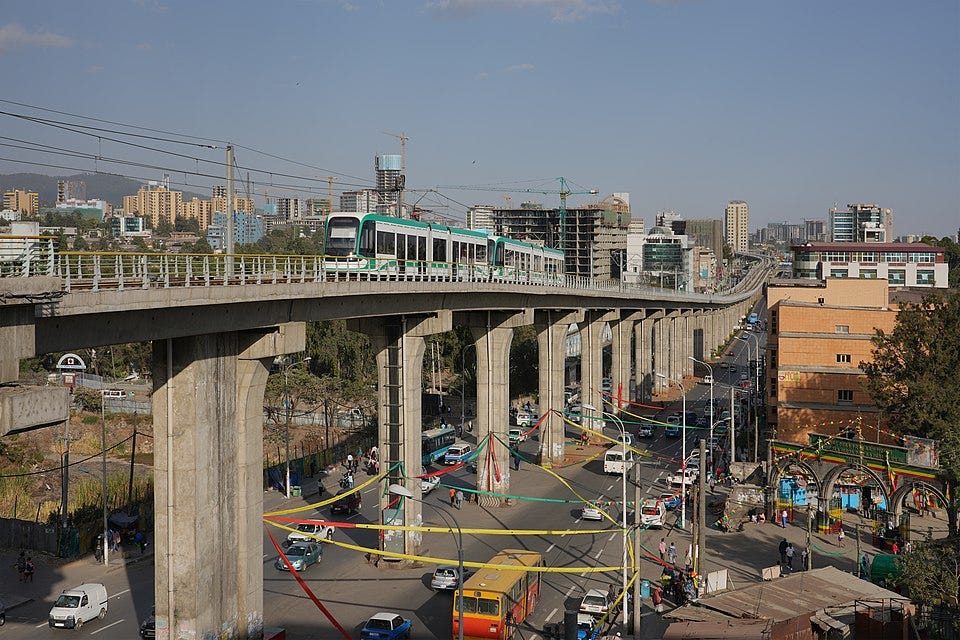
Ethiopia is betting that soft power in the 21st century will come from infrastructure. Addis Ababa’s light rail is the clearest sign of that shift. It’s the first modern system in Sub-Saharan Africa outside South Africa, and it runs on Ethiopia’s own hydropower. For a landlocked capital, this is more than transit. It’s a message: geography can be turned into strength.
The same idea shapes Ethiopia’s national and regional strategy. The electrified railway from Addis Ababa to Djibouti’s port — built with Chinese financing — cuts travel times from days by truck to under a day by rail. For a country without a coastline, this line is a lifeline. Costs fall. Reliability rises. The map opens.
To the south, Ethiopia and Kenya are now linked by a 2,000-megawatt high-voltage interconnector. It pulls both countries into the Eastern Africa Power Pool and hints at a future where energy markets are shaped by water and elevation, not oil.
This strategy embraces Bruce Lee’s philosophy: “Absorb what is useful, discard what is not, and add what is specifically your own.” Ethiopia takes financing, engineering, and ideas from abroad, but the strategy is rooted in its own geography and long-term needs.
But infrastructure alone won’t determine Ethiopia’s future. Much of Africa lacks navigable rivers because its interior plateaus rise so high above sea level. Ships can’t move inland — but electricity can. Hydropower from the Ethiopian highlands can drive electrified railways that move people, goods, and ideas across landscapes where natural waterways never formed.
I want to make this point clearly: most of Africa lacks long, navigable rivers, which makes transport expensive and slows economic growth. That’s why the combination of hydropower and rail feels like such a natural fit for the continent’s geography.
Seen this way, Ethiopia isn’t just building rail. It’s building the backbone of a transport system designed for Africa’s topography.
This also reveals a deeper truth. Ethiopia and Kenya, neither rich in oil, are being pushed to grow through people and connectivity rather than extraction. That kind of pressure can become an advantage. China’s role fits here too. As Lord Palmerston famously said, “Nations have no permanent friends or permanent enemies — only permanent interests.” The emerging East African corridor follows that logic. Geography makes cooperation more valuable than rivalry, and the region is beginning to act on it.
Beyond Megaprojects: Human Capital as Ethiopia’s Real Power

Global parallels offer a useful blueprint for how countries turn geography and constraints into long-term strength.
According to Edward Glaeser, the Bangalore model shows how cities become “conduits for ideas.” Bangalore is a place where private firms train thousands of young workers and where constant creative collisions — between engineers, programmers, entrepreneurs, and students — produce a steady stream of talent. Its rise didn’t come from natural resources. It came from people, density, and the free flow of knowledge. Today, Bangalore is one of the world’s top engines for engineering and software talent, a reminder that human capital, not minerals, drives long-term growth.
The Swiss model rests on deep investment in human capital. World-class apprenticeships, research institutions like ETH Zurich, and high-trust civic structures allow talent to thrive. Switzerland turned the limits of being landlocked into a competitive advantage by cultivating skills and stable institutions.
Ethiopia can follow a similar arc, but only if it expands its opportunity frontier through regional partnership. A win–win strategy matters here:
Djibouti for port access
Kenya as an economic partner with a growing tech ecosystem
Eritrea, if relations normalize and ports reopen
Somalia for long-term market integration
The future is not Ethiopia versus its neighbors. The future is Ethiopia with its neighbors. When Ethiopia invests in its people, it won’t just power its own growth. It will build the talent and stability needed to become the central node of a connected, resilient region.
Geography Is Not Destiny — But It Sets the Stage
Ethiopia’s greatest constraints are written into its landscape — its highlands, its lack of navigable rivers, and its missing coastline. Yet those same limits can become strengths through deeper partnership with its neighbors. The real question isn’t whether Ethiopia will be influential, but what kind of influence it chooses to build.
Will it follow an extractive path that lifts only a few?
Or an inclusive one where education and opportunity move with the country?
Human capital — not megaprojects — ultimately makes nations thrive. Dams and railways matter, but they amplify prosperity; they don’t create it. Growth endures when talent clusters, trust grows, and ideas move freely.
The most durable strategies work with the grain of nature: turning headwaters into hydropower, highlands into connectivity hubs, and a central location into regional partnership. Switzerland mastered this. Ethiopia now holds its own set of raw ingredients.
Nelson Mandela once said, “It always seems impossible until it is done.” The impossibility was geography; the doing is using modern knowledge to overcome it.
So we return to the opening question: can a landlocked African nation become the Switzerland of its continent? Ethiopia is trying. Whether it succeeds will depend not on its dams or its railways, but on the choices it makes about its people. And if not Ethiopia, then which African nation might rise next?
Disclaimer: The views expressed here are solely my own and do not reflect those of any employer, agency, or affiliated organization. This article is intended to empower readers with objective geographic and planning insights to encourage informed discussion on global issues.