
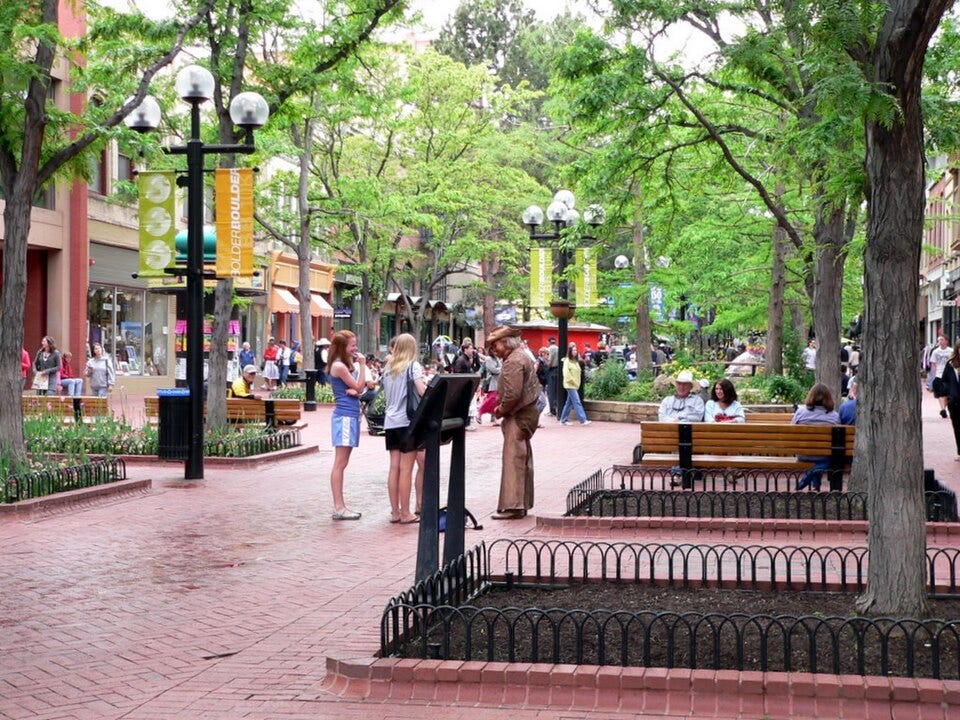

Have you ever wondered why some places feel full of life — cafés, bakeries, grocery stores — while other areas grow for years with almost nothing but houses?
You can see it across Florida. Drive through any fast-growing city. New subdivisions rise. Streets fill with homes. But basic conveniences? Those take years.
Residents begin asking the same questions:
“Why don’t we have a grocery store yet?”
“Where are the restaurants?”
“Why doesn’t the city require more commercial development?”
Retail planner Robert J. Gibbs puts it bluntly: “The retail and shopping center sector is the riskiest of all principal real estate sectors.”
The questions are reasonable. But zoning land for shops does not create a market. Planners must balance the community’s vision with what the market bear. For instance, setting aside vast amounts of land for housing without considering where people will work or shop is not in the public’s best interest.
In many growing communities, housing arrives first. Retail follows later — sometimes years later. New neighborhoods are often built well ahead of the existing town, surrounded by farmland or open land. Planners call this leapfrog development. Most residents simply experience it as living somewhere new that still lacks everyday services.
There may appear to be enough households, but not enough customers to support a store.
Retail is a system, not an amenity. Its success depends on mostly invisible forces: how many households live nearby, how much they spend, how far they are willing to drive, and what competing stores already exist. Retail is also fiercely competitive. Population thresholds describe the level of demand needed for retail to thrive, but in practice multiple businesses often compete for the same households. Instead of one grocery store serving an entire area, several stores may divide the market, each capturing a portion of local spending.
Understanding this system helps explain why some communities quickly develop vibrant commercial districts while others wait years for basic amenities.
Retail Has Measurable Population Thresholds

Industry standards developed by the International Council of Shopping Centers (ICSC) classify retail centers by size and trade area. Urban retail planner Robert J. Gibbs builds on this framework by linking those categories to the number of households typically required to support each type of retail center.
The table above shows how retail formats scale from small neighborhood shops to large regional destinations. When I first encountered these thresholds while reading Robert J. Gibbs, I began noticing them everywhere. Grocery stores often appear every few miles, convenience stores cluster at major intersections, and regional shopping centers sit farther apart drawing from much larger areas. The numbers are not precise formulas, but they reveal a consistent pattern: retail tends to follow population and geography.
Corner store (1,500–3,000 sq. ft.)
Corner stores typically sell essentials such as beverages, snacks, and prepared food. Gibbs estimates that they need approximately 800 to 1,000 nearby households—roughly the number within a typical 160-acre traditional neighborhood designed around a five-minute walk from its center.
Convenience center (10,000–30,000 sq. ft.)
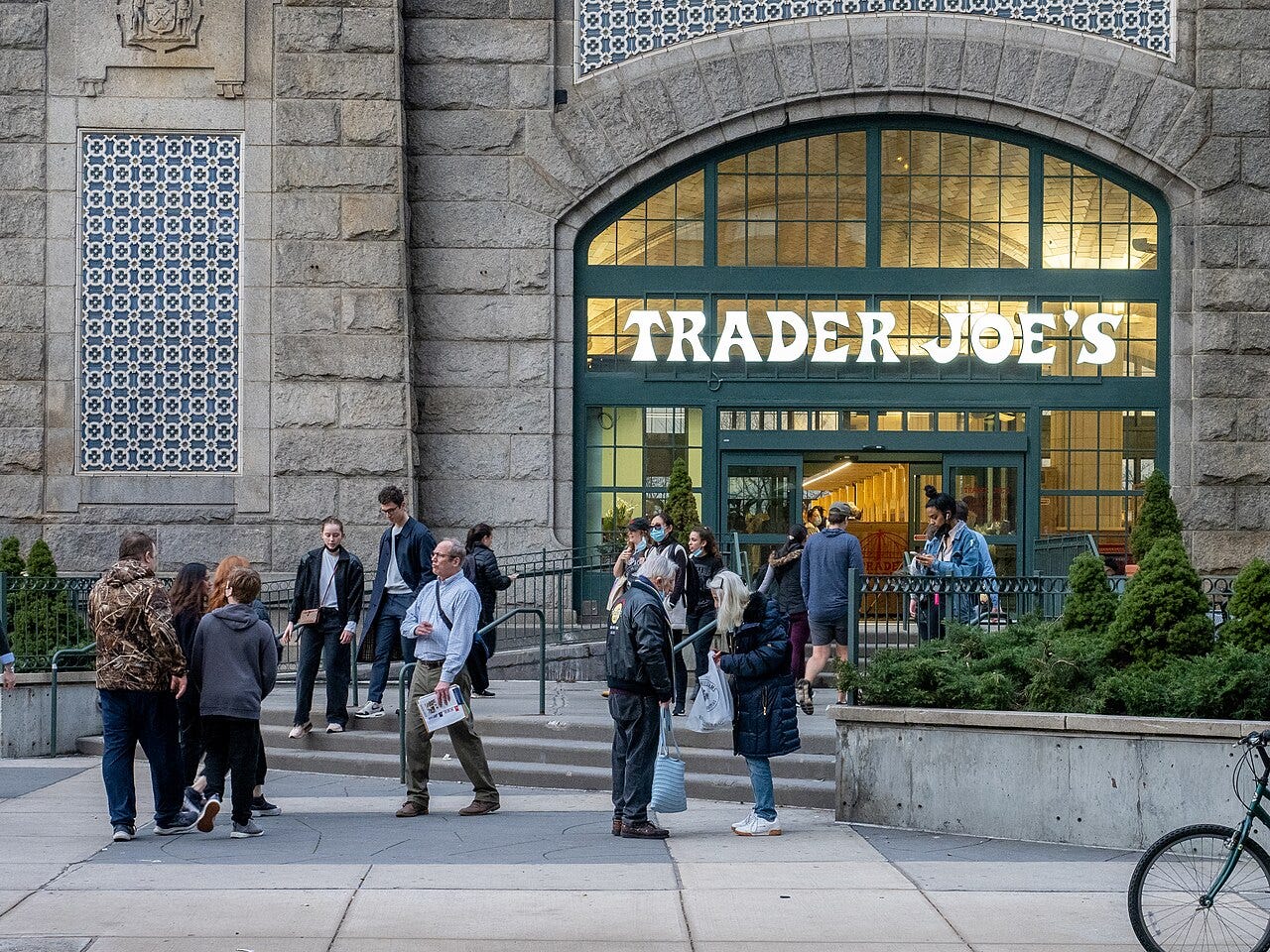
These are small retail clusters serving everyday needs. You might see an Aldi, small pharmacy, or coffee shop. A Trader Joe's can fall within this size range — though it behaves more like a specialty grocer, drawing from farther away. These centers typically require around 2,000 nearby households within one to one and half mile, depending on income and traffic.
Neighborhood center (30,000–100,000 sq. ft.)
Neighborhood centers are typically anchored by a grocery store that serves as the core of a traditional community shopping area. Think of a Publix, Kroger, or Albertsons accompanied by a handful of smaller shops such as a dry cleaner, nail salon, or sandwich shop. These centers often require 6,000–8,000 households within one to two miles.
Retail planning literature varies somewhat on the exact size. Robert J. Gibbs notes that many grocery-anchored centers fall around 50,000–70,000 square feet, while industry classifications from the International Council of Shopping Centers and the Urban Land Institute place neighborhood centers more broadly within 30,000–100,000 square feet, depending on anchor size and market conditions.
Community center (150,000–450,000 sq. ft.)
At this scale you begin to see large-format retail. A Walmart Supercenter or Super Target alone can exceed 150,000 square feet. Community centers may also include home improvement stores, office supplies, sporting goods retailers, and multiple restaurants. Supporting this level of retail typically requires 50,000 or more people within a four- to six-mile trade area.
Regional center or power center (500,000+ sq. ft.)
These are major shopping destinations anchored by large retailers such as Macy’s, Dillards, Costco, Home Depot, or Target. Historically these centers required 150,000 or more people within a ten- to twelve-mile radius.
Human impact: When there are too few homes nearby, stores struggle to survive. Vacant storefronts follow, forcing residents to drive farther for everyday needs.
Takeaway: Zoning commercial land does not automatically create customers. Retail appears when households, spending power, and access come together in the same place.
Retail Demand Is More Than Just Population
.jpg#/media/File:Trader_Joe's_-_Bridgemarket_-_NYC_(51923598140).jpg)
National retail inventories illustrate this competitive landscape. According to the ICSC, the United States contains roughly 23–24 square feet of shopping center retail space per resident, meaning that a community’s retail space is typically shared among many competing stores rather than dominated by a single business.
Population thresholds are only a starting point. Retailers look far deeper than a simple population count when deciding where to locate.
Some retailers, like Trader Joe's, aren't just counting people — they're looking for a very specific kind of customer. Others, like Starbucks, compete aggressively for the same market, sometimes saturating an area to block competitors. In reality, retail is a competitive battlefield.
Consider the fierce battle for coffee dominance. I saw it firsthand when Starbucks chose to saturate a market, placing stores in close proximity to each other to capture maximum market share and, some argue, to make it impossible for local competitors to survive. This shows that the market is not a passive system; it is a dynamic and sometimes ruthless battle for growth and supremacy.
This may seem excessive, but it reflects how carefully retailers approach site selection. As retail planner Robert J. Gibbs explains:
“The retail industry relies upon proven methods and techniques to minimize the risk and earn market rate of return of their investment.”
Retailers analyze traffic patterns, nearby households, income levels, and competing businesses before choosing where to open. What may look like oversaturation is often the result of deliberate analysis of demand within a specific trade area.
Why Trade Area Matters More Than City Limits
Next time you drive home, pay attention to where the retailers sit. The grocery store, the coffee shop, the convenience store — they’re rarely on the side you’d pass leaving the neighborhood. They place themselves where traffic flows toward home.
Real estate agents love saying the three most important things are “location, location, location.” For retailers, it’s not a cliché — it’s survival. And location, for them, means something specific: being on the right side of the street, on the right leg of your commute, inside the right trade area.
Retail ignores city limits. It responds to access, income, traffic, and competition—not lines on a map.
A “town center” on a land-use map expresses a community vision. Whether it becomes a functioning retail center depends entirely on the surrounding market. If households within a short drive lack the income or density to support it, the market will not materialize.
This is where many communities struggle. Over designating commercial land — a common planning habit — can lead to empty pads or underperforming corridors when the surrounding market hasn’t yet matured.
Geographic context: Trade areas are regional and organic. They follow roads, cross rivers, and ignore city and county lines.
Human impact: When too much land is zoned for retail, the result isn’t a town center — it’s scattered pads and fragmented corridors that never quite become a place.
Takeaway: Retail must be understood regionally, not politically. The geography of people — where they live, how they move, which direction they drive home — matters more than the boundaries on a map.
Why Retail Data Can Lag Fast-Growing Communities
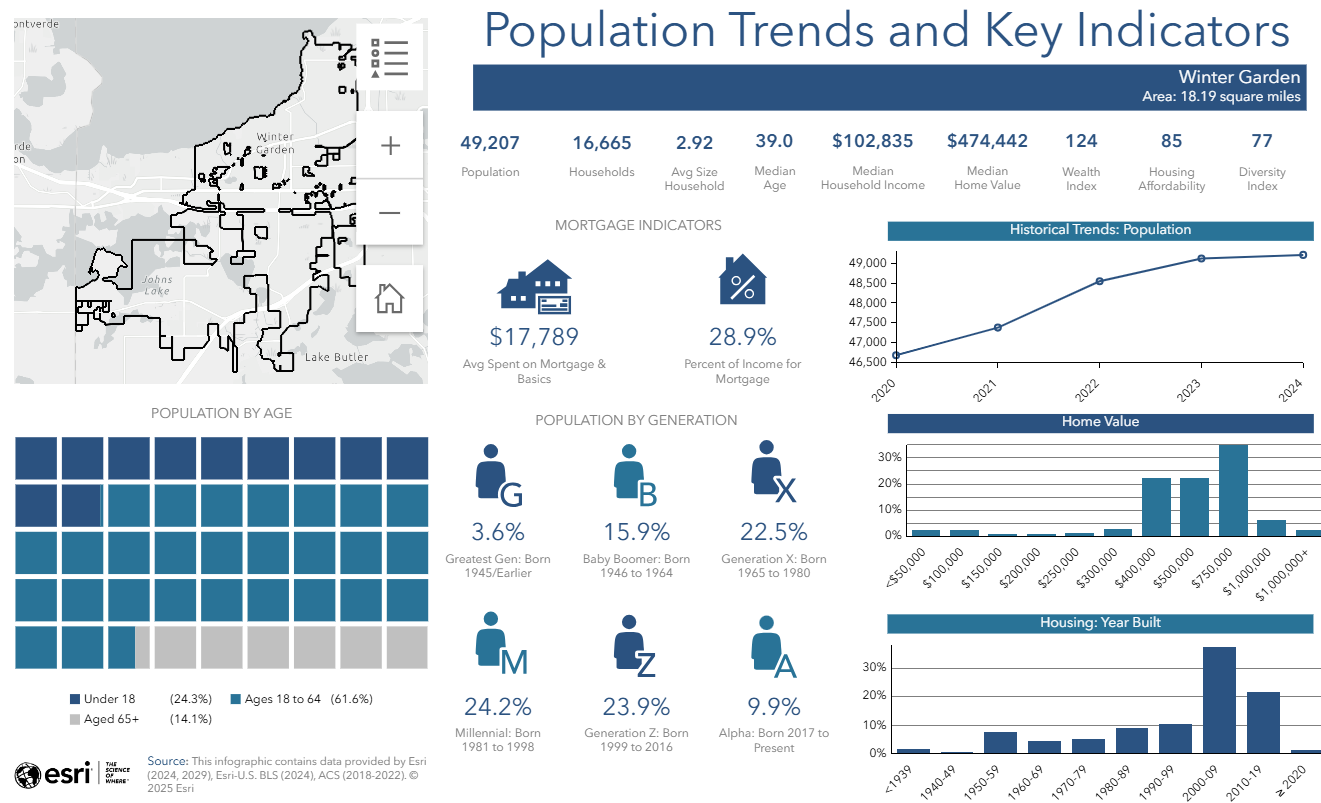
This is where theory meets practice. Even the best market studies can struggle to keep up with reality.
While working for the City of Winter Garden — frequently analyzing demographic and market data for the economic development team — I saw this firsthand. Developers conducted their due diligence, using standard market research to project growth and spending. But that data was looking in the rearview mirror. It failed to fully capture not just the explosive speed of the city’s growth, but also the rapid change in incomes and demographics. The market was evolving faster than the data could track, creating opportunities — and risks — that the initial studies missed.
The lesson is simple: data is a guide, not a prophecy. Good planning requires combining market data with local knowledge — understanding not only where a place has been, but where it is going.
Putting the Retail Thresholds Into Perspective

Retail geography teaches an important lesson about resilience. Communities cannot simply require retail and expect markets to support it. When we ignore the thresholds, the competition, and the limits of our data, we risk creating the very problems we are trying to solve: vacant storefronts, underperforming corridors, and frustrated residents.
Conversely, when communities align density, income, and realistic expectations with the natural scale of retail, they create resilient commercial ecosystems — places that can grow, serve residents, and endure over time.
This is not about resisting growth or surrendering to developers. It is about aligning expectations with geographic reality. We do not force markets to appear. We understand how they work, and then we plan accordingly.
The real question becomes:
If a community truly wants a grocery store or a vibrant town center, are its residents and leaders willing to support the density and economic conditions that make it viable? Are we prepared to build the geography that can sustain the place we envision?
That is where foresight begins.
Disclaimer: The views expressed here are solely my own and do not reflect those of any public agency, employer, or affiliated organization. It empowers readers with objective geographic and planning insights to encourage informed discussion on global and regional issues.