
Why the Hardest Leadership Act Is Letting Go
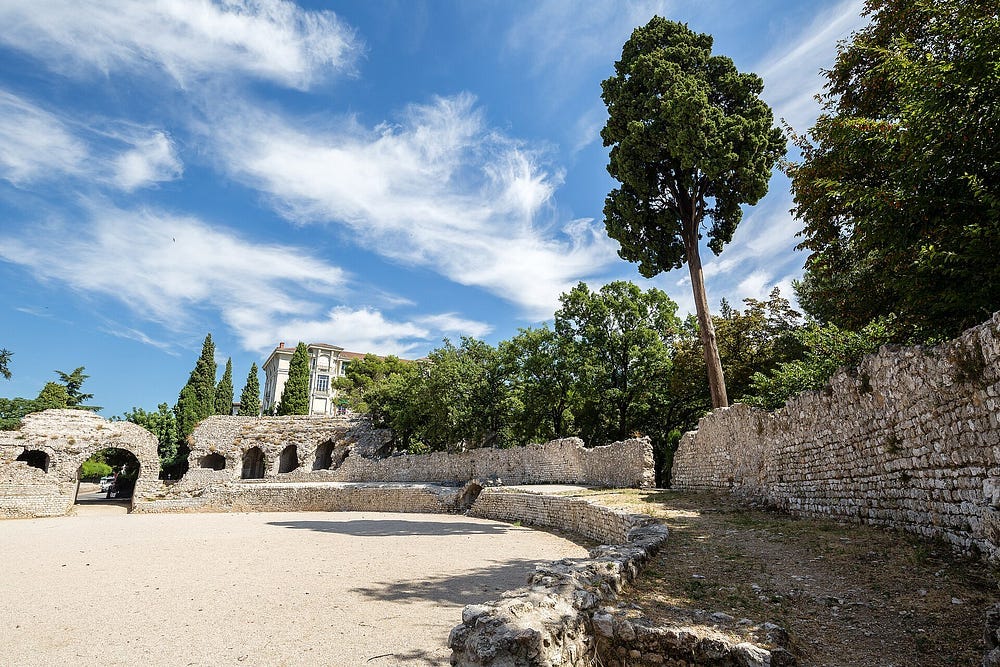
Growing up in Nice, my teachers sometimes took us to the Arenes de Cimiez, a hilltop lined with olive trees and Roman ruins overlooking the Mediterranean, it was an amazing place to play with my friends among the olive trees and Roman ruins. Without knowing it, those ruins were teaching me a powerful lesson: the most enduring societies are built by leaders who value duty over personal glory.
From those ancient terraces to the marble monuments of Washington, D.C., I’ve always been drawn to places shaped by a rare kind of leader. These were not men who clung to power — they were architects of systems built to outlast themselves.
As Peter Drucker wrote, “Leadership is doing the right things, not just doing things right.” For these leaders, the ultimate right thing wasn’t how they wielded power — it was how, and when, they chose to let it go.
This act of voluntary surrender is exceedingly rare throughout history. Yet those who performed it — Cincinnatus, Washington, and Lee Kuan Yew — did more than just leave office; they changed the trajectory of civilizations. They understood a fundamental principle: that power, like a river, must flow to keep the system alive.
The Roman Precedent: Power as a Temporary Trust
Cincinnatus and the 16-Day Dictatorship: A Lesson in Stepping Down
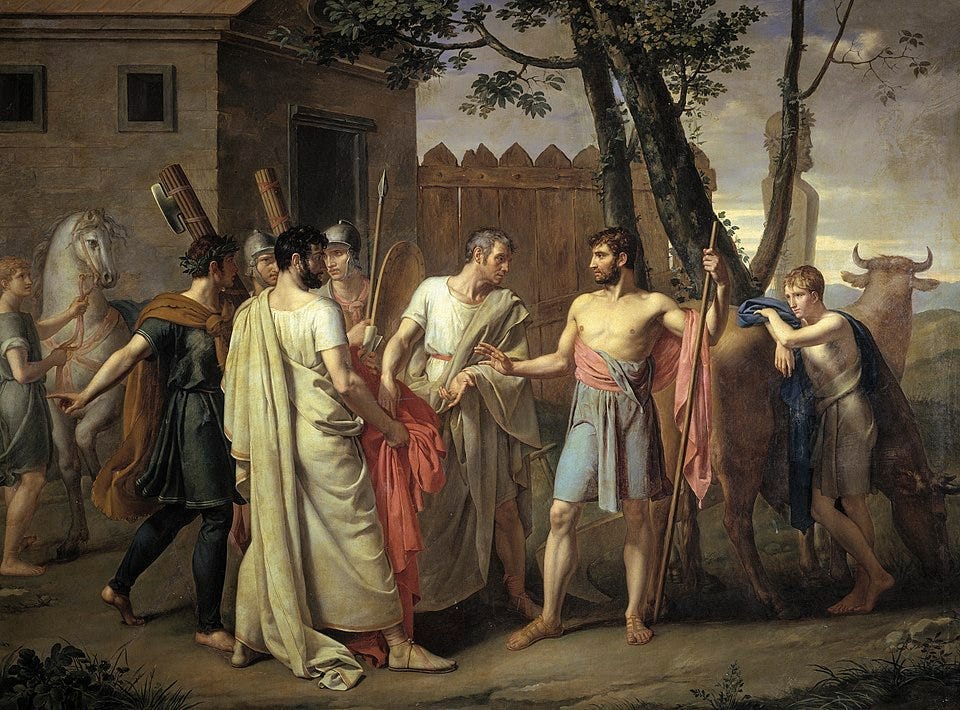
In 458 BC, Rome was on the brink of disaster. So they did something unthinkable: they gave a farmer named Lucius Quinctius Cincinnatus absolute power as Dictator.
He left his plow, led the army to a swift victory, and did the impossible. Just sixteen days later, with the crisis over, he resigned his supreme command and returned to his farm.
“Waste no more time arguing what a good man should be. Be one.”
— Marcus Aurelius
Cincinnatus didn’t debate virtue in a forum. He lived it on his farm. He proved that the highest form of leadership is action, not endless argument.
The Real Takeaway: A republic’s health depends on leaders who are stewards, not owners. Their job is to fix the crisis and return the keys.
George Washington and the Precedent of Peaceful Transfer
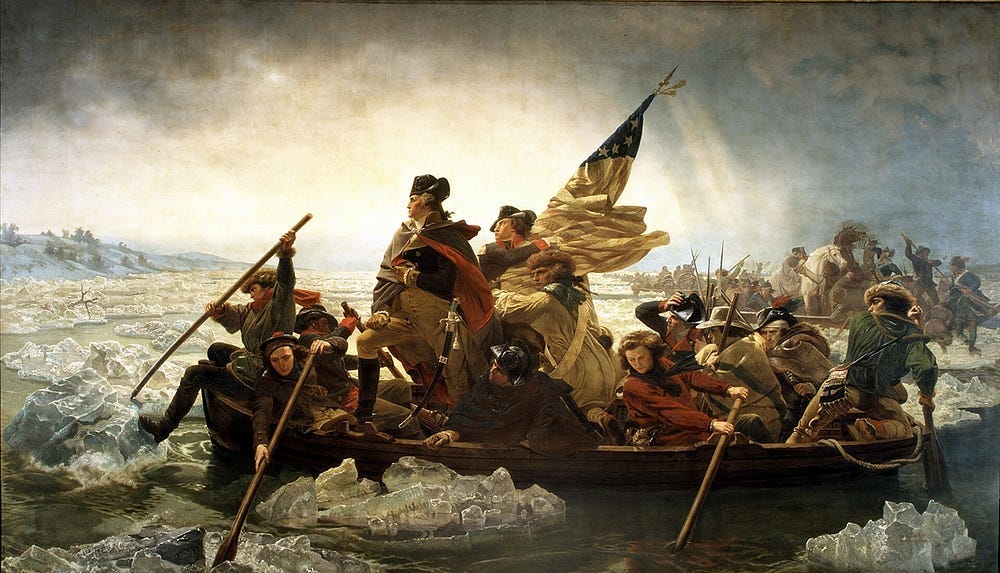
After winning the American Revolution, George Washington held more power and popularity than any American ever would again. The world expected a king.
He shocked them all. In 1783, George Washington appeared before Congress at the statehouse in Annapolis to resign his military commission at the end of the Revolutionary War. Then, in 1796 after two terms as president, he walked away from ultimate executive power, establishing the world’s most powerful precedent: the peaceful, voluntary transfer of authority.
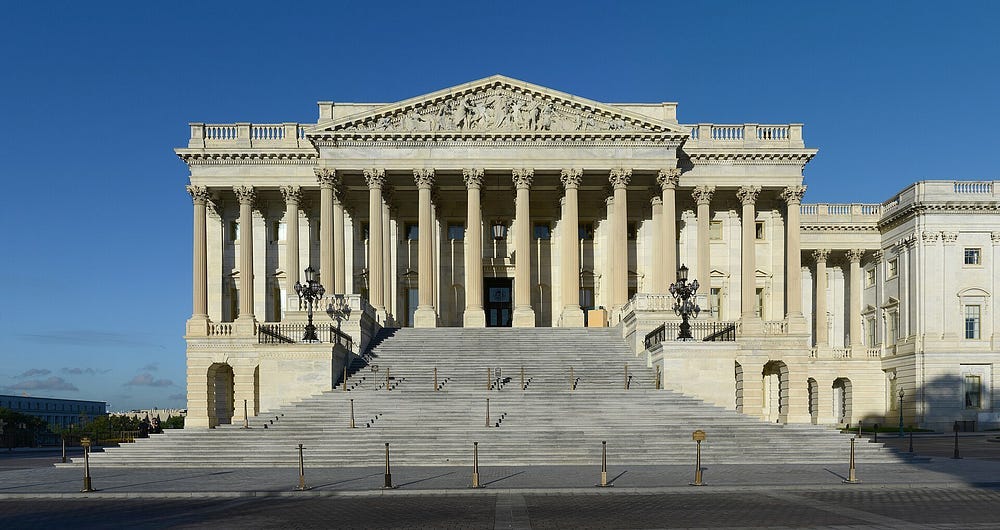
The neoclassical architecture of Washington D.C. isn’t just aesthetic —it mirrors ancient Rome and Greece for a reason: the founders were designing not just monuments but memory. Washington’s self-restraint turned that stone and marble ideal into a living principle.
“When you want to help people, you tell them the truth. When you want to help yourself, you tell them what they want to hear.” — Thomas Sowell
Washington chose truth over flattery, duty over desire. In doing so, he didn’t just give up power; he embedded humility into the constitutional DNA. The ultimate test of this principle came just a few years later — and it failed spectacularly. While Washington was establishing the precedent of peaceful transfer, Napoleon Bonaparte was forging its opposite. After his first exile to Elba in 1814, Napoleon couldn’t accept a world without his power. He escaped, seized France once more, and plunged Europe into another war that ended in his final defeat at Waterloo. His refusal to let go ensured his legacy was one of collapse, not continuity.
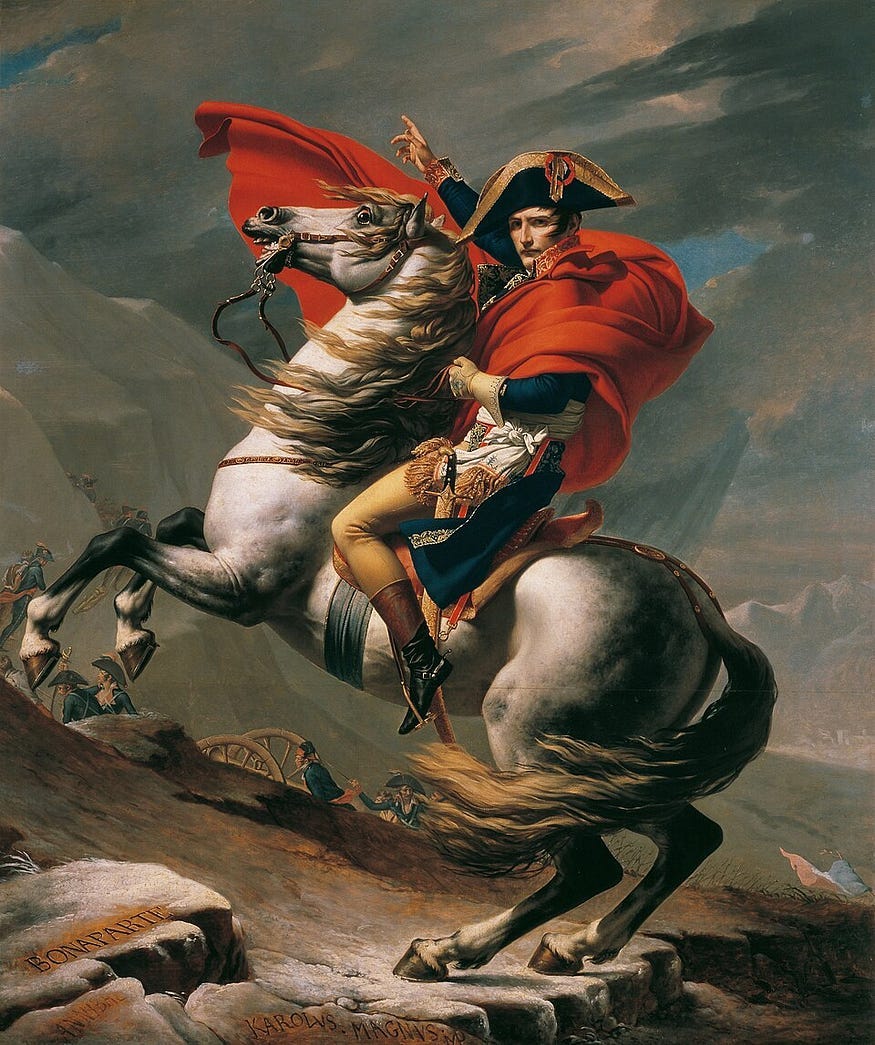
This is the choice that defines civilizations. The Washingtons of the world, who step down willingly, build institutions that last. The Napoleons, who cling to power, build systems that collapse under the weight of their own insecurities. The strongman’s era always ends the same way — not with succession, but with stagnation and ruin.
Takeaway: The most enduring infrastructure a leader can build is trust in a system that functions without them.
Why Singapore’s Success Proves the Power of Planned Succession
Singapore’s geography — small, resource-poor, and vulnerable — demanded continuity and adaptability. Lee Kuan Yew governed Singapore for over three decades from 1959 to 1990, transforming a swampy trading post into a global hub. He understood that a nation’s survival depends on designing succession planning as carefully as physical infrastructure.
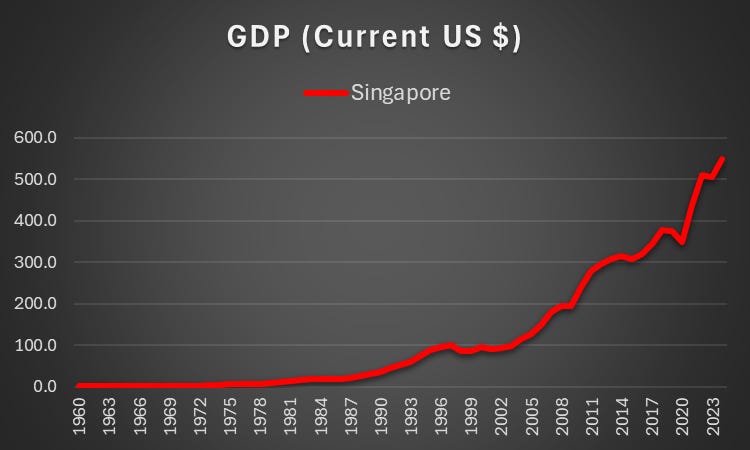
In 1990, at the height of its success, Lee didn’t simply step down — he executed a deliberate, carefully planned transition to a prepared successor, proving that planned leadership renewal can be a national advantage.
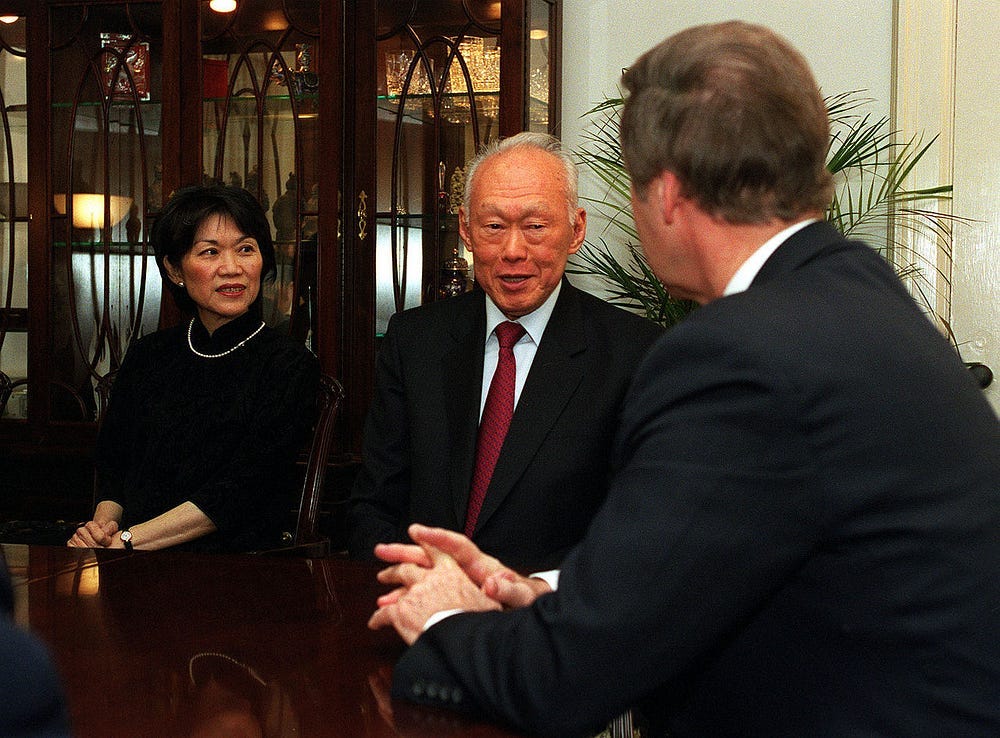
Takeaway: The most critical infrastructure a leader can build is the tradition of their own peaceful departure. That tradition is the system.
The Courage to Step Aside
Leadership that endures is leadership that lets go. Cincinnatus returned to his farm. Washington to Mount Vernon. Lee Kuan Yew to an advisory role. Each proved they had built something stronger than themselves.
If leadership is stewardship, then the final test of greatness is not how much power you amass, but how gracefully you let it flow back to the system you swore to serve.
The world is littered with the ruins of empires led by men who could not imagine a world without them. The true legacy of leadership is a nation — or a company, or a team — that thrives long after its leadership has left the stage.

Lee Kuan Yew’s genius was building a system so resilient that it could thrive beyond his own leadership — a system born from his unique ability to turn weakness into strength, as chronicled in How Singapore Turned Geography Into Power.
Who is a modern leader you admire for putting the system before themselves? What does healthy leadership transition look like in your organization? Share your thoughts in the comments.
Disclaimer: The views expressed here are solely my own and do not reflect those of any public agency, employer, or affiliated organization. It empowers readers with objective geographic and planning insights to encourage informed discussion on global and regional issues.
As always very interesting article!