
I still remember my first visit to Florida in early summer. I knew it was going to be hot, but on paper the forecast looked great: mid-70s in the morning, low- to mid-80s in the afternoon, and plenty of sunshine. I wasn’t worried as I had experienced humidity before, and where I was coming from, it wasn’t that bad.
One morning, as I headed to the Magic Kingdom, something felt off almost immediately. I stepped outside, started walking, and before doing anything strenuous, my palms felt moist and I was already sweating. The temperature was exactly what the weather app promised — right in the “ideal” range — yet the air felt heavy and uncomfortable.
I remember thinking: Why does this feel so oppressive when the numbers look so good?
Many factors influence how we experience weather, but most people instinctively point to humidity to explain Florida’s discomfort. In this article, I’ll argue that while humidity matters, dew point is the key variable that actually explains how Florida weather feels.
How Humidity Works — And Why It Can Mislead You
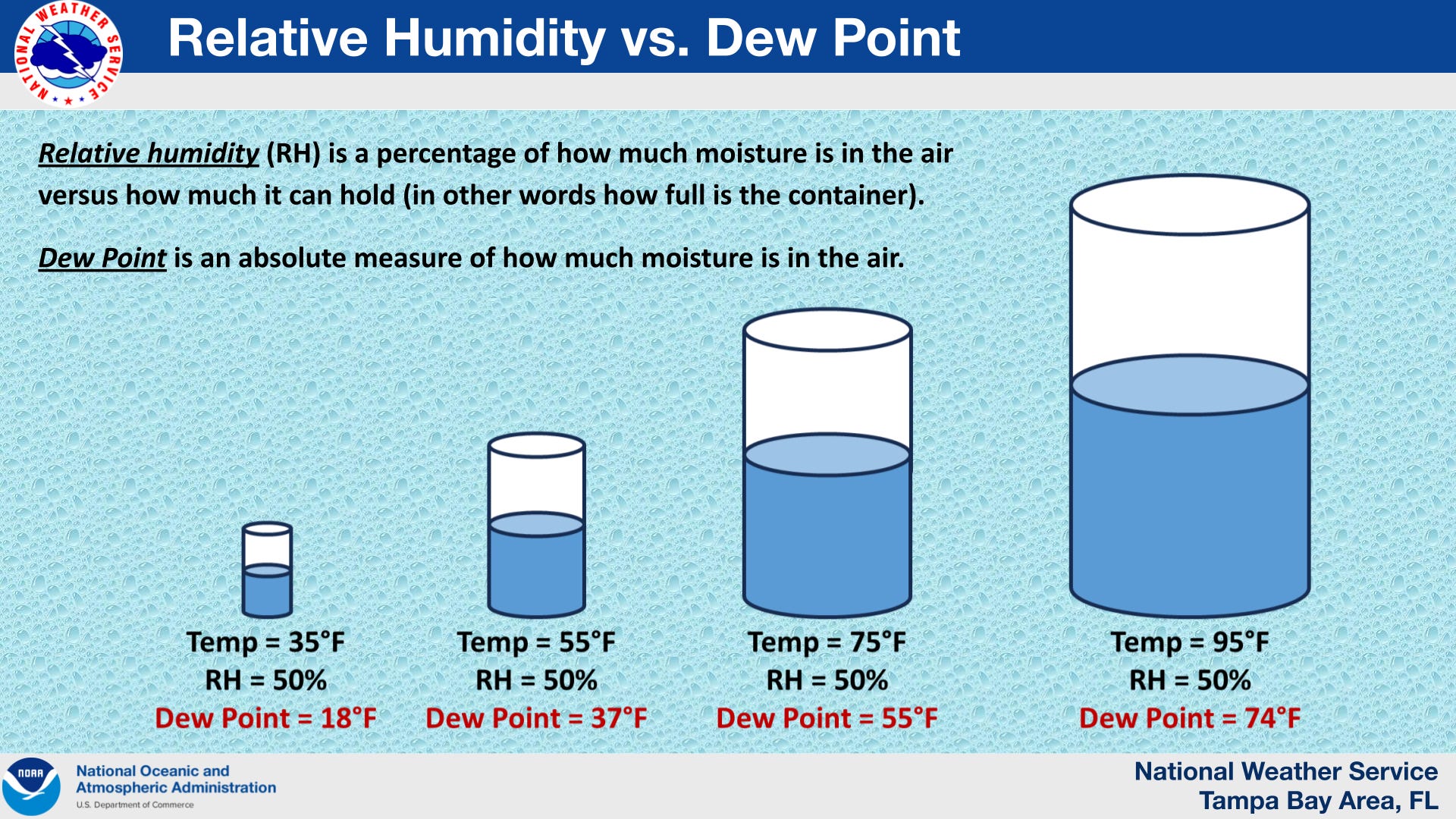
NOAA, defines relative humidity: Humidity is a measure of water vapor in the air. Meteorologists typically describe water vapor in the atmosphere in two different ways: absolute humidity and relative humidity.
Here’s where relative humidity can be misleading.
On a cool day, the air doesn’t have much capacity to hold moisture. Even a small amount of water vapor can push relative humidity close to 100 percent — yet the air still feels comfortable.
On a hot day, the air can hold far more moisture. So even when the relative humidity looks “lower,” there may actually be much more water vapor in the air.
Relative humidity tells you how full the air is — but not how much moisture is actually in it.
The Florida Test: Why 82°F Can Feel Like Two Different Days
Imagine a family visiting Tampa in July, planning a full day at Busch Gardens. The forecast calls for 82°F — warm, but not extreme. Sounds ideal.
Now let’s consider two different days at that same temperature but with different dew points.
On the first day, the dew point is around 65°F. The air feels sticky, but still manageable. Sweat can evaporate somewhat, making it possible to walk around the park with breaks, shade, and plenty of water.
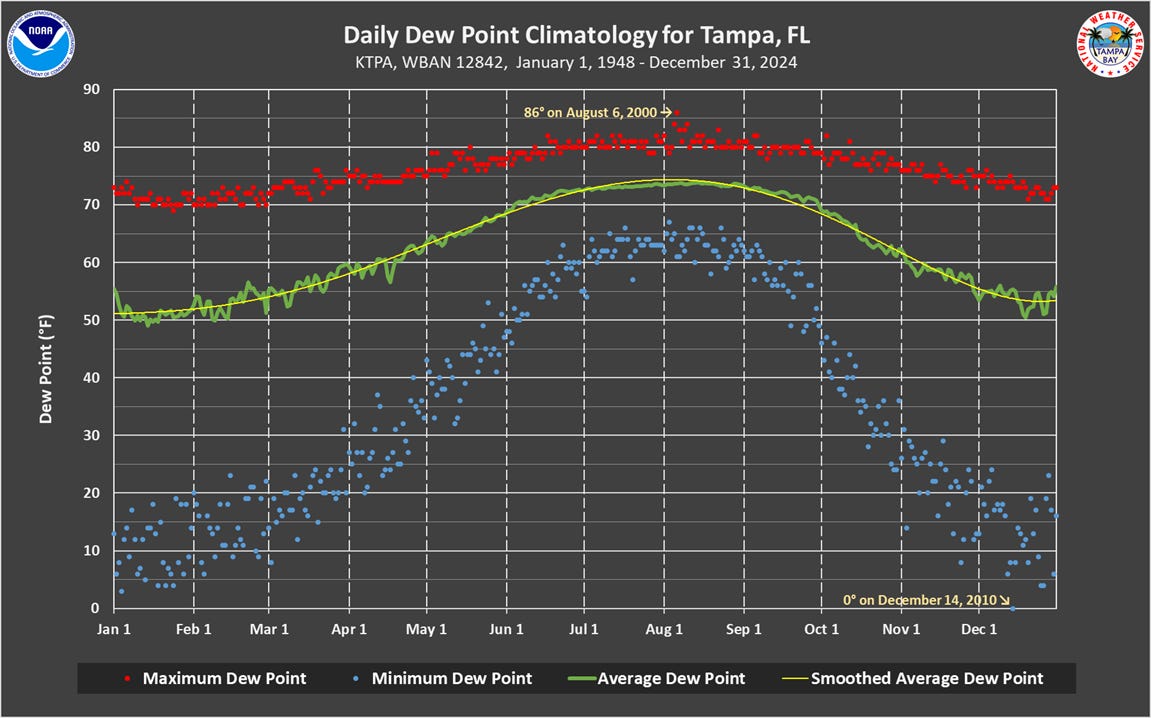
On the second day, the dew point is closer to 76°F, which is common during midsummer in Tampa. The temperature hasn’t changed — but the experience has. The air feels miserable. Sweat no longer evaporates effectively, and after a short walk you feel sticky, drained, and overheated.
In both cases, the temperature is the same.
The humidity percentage might even look similar.
The difference isn’t the number on the thermometer.
Dew Point: The Real Number That Explains “Feels Like”
According to NOAA, dew point is the temperature the air needs to be cooled to in order to achieve a relative humidity of 100%. The greater the dew point rises, the greater the amount of moisture in the air. Humidity alone doesn’t accurately reflect how the air will feel.
This matters because your body cools itself by sweating. When the air is already loaded with moisture, sweat evaporates more slowly. The result is that your body feels hotter and more uncomfortable — even at temperatures that look perfectly reasonable on paper.
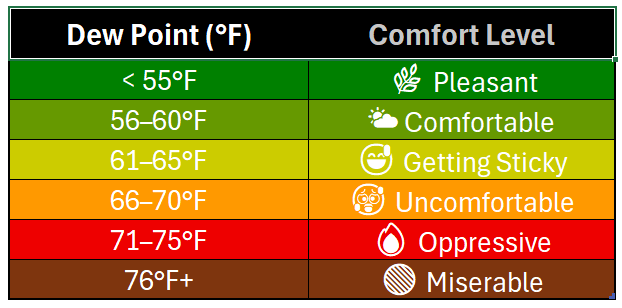
That’s why humidity alone doesn’t tell the full story. Dew point explains how the air actually feels. At moderate temperatures — especially in the mid-70s to low-80s — small increases in dew point can have an outsized effect on comfort, often making a bigger difference than the temperature itself.
In Florida summers, dew points commonly fluctuate between uncomfortable, oppressive, and miserable. That’s why days with similar temperatures can feel radically different once moisture in the air crosses that mid-60s threshold.
At moderate temperatures — especially in the mid-70s to low-80s — small increases in dew point can have an outsized effect on comfort, often making a bigger difference than the temperature itself.
If you’re curious how this plays out across the state, I explored this question in more detail in Which Part of Florida Has the Best Climate Year-Round?, comparing cities using real NOAA data on heat, rain, and dew point.
Your New Weather Rule: Check the Dew Point, Not Just the Temperature
If you’re visiting Florida, don’t just check the temperature — and don’t rely on humidity percentages alone.
Check the dew point.
It’s the single best number for understanding whether a day will feel pleasant or oppressive, even when the forecast looks ideal.
It’s a lesson I learned the hard way on my first trip to Florida, when the numbers looked perfect but the air told a different story.
Disclaimer: The views expressed in this article are solely my own and do not reflect those of any public agency, employer, or affiliated organization. This blog aims to educate and empower readers through objective geographic and planning insights, fostering informed discussion on global and regional issues.