
The word climate comes from the Greek klima, meaning inclination or slope. I experienced this firsthand on a recent trip to Las Vegas. It was 96°F on the Strip. Forty-five minutes later, after driving to Kyle Canyon, it was 76°F. The reason is simple: for every 1,000 feet of elevation you gain, the temperature drops by about 3.5 degrees. You don’t need to check the weather app—your body feels the difference.
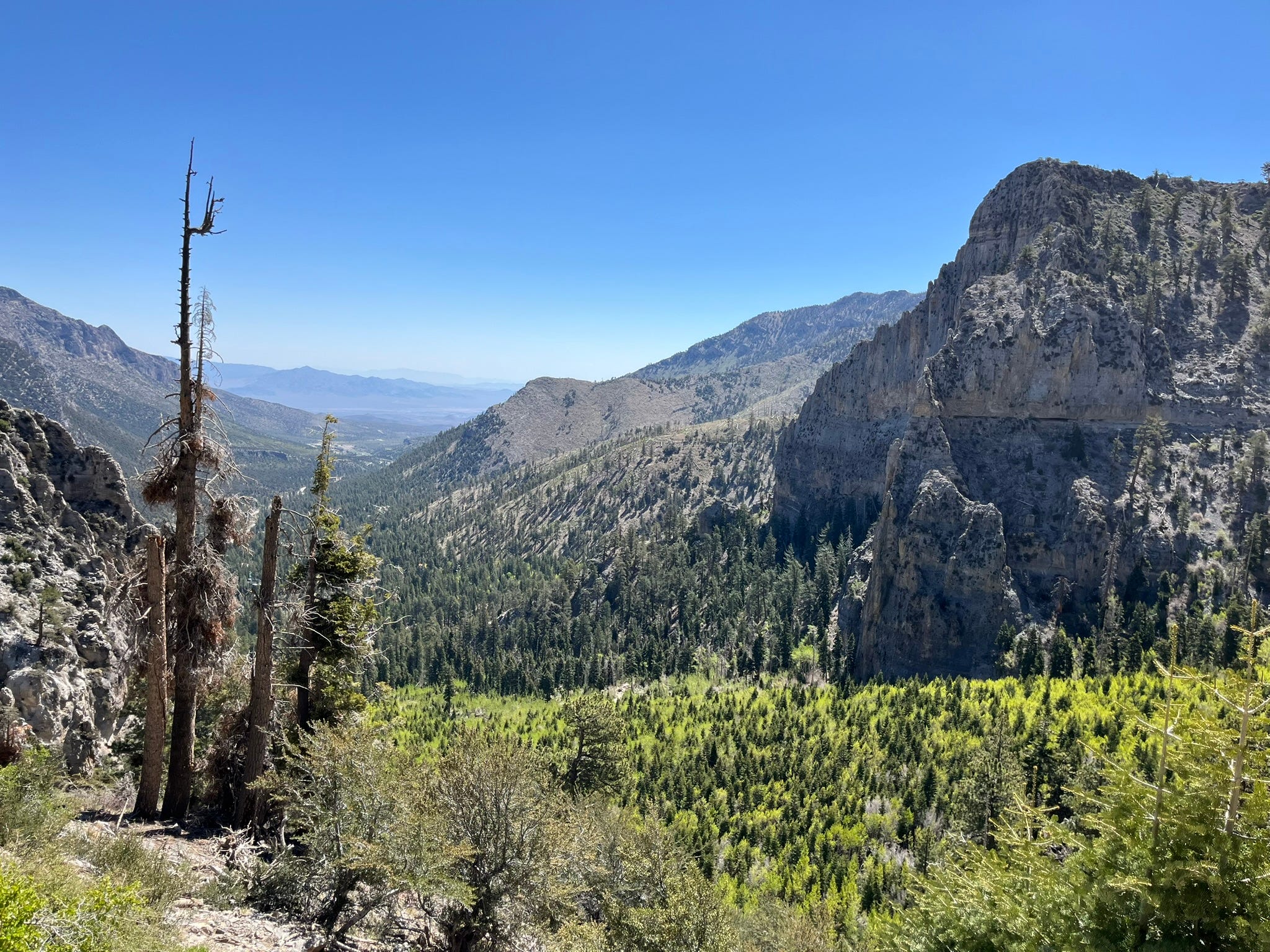
Kyle Canyon is part of the Spring Mountains National Recreation Area near Las Vegas, but the relationship between elevation and temperature applies throughout the region. Although much of the Las Vegas Valley is relatively flat, some parts of the metropolitan area sit at higher elevations than the Strip.
If you're considering a move to Las Vegas, a difference of just a few hundred feet in elevation can noticeably improve your comfort—not only during the summer, but throughout much of the year.
I will focus mainly on elevation. Using USGS topographic maps, I’ve identified a few neighborhoods that sit noticeably higher than the Strip. I’ll show you where they are—and what they actually feel like.
Henderson Foothills: Living Above the Valley Floor
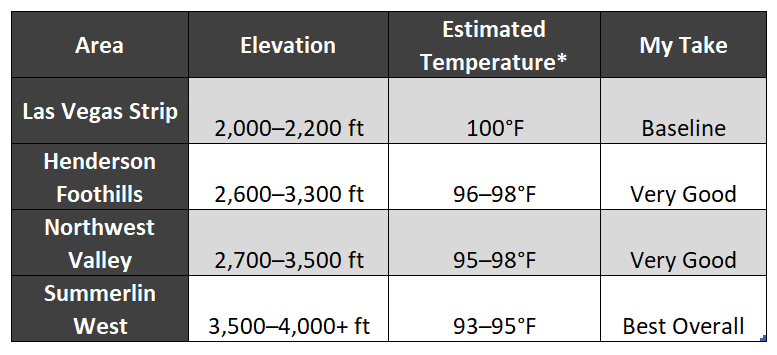
To compare temperatures, I will use the Las Vegas Strip as the baseline. The Strip sits at an elevation of about 2,000 to 2,200 feet. Let’s assume the temperature on the Strip is 100°F.
The Henderson foothills, which wrap around Sloan Canyon National Conservation Area and the Black Mountain area, are our first area of interest. Neighborhoods such as Anthem, Anthem Highlands, and MacDonald Highlands generally range from 2,600 to 3,300 feet in elevation. Using the average lapse rate, temperatures here can be expected to range from about 96°F to 98°F. When summer temperatures regularly reach 100°F or more, every degree matters.
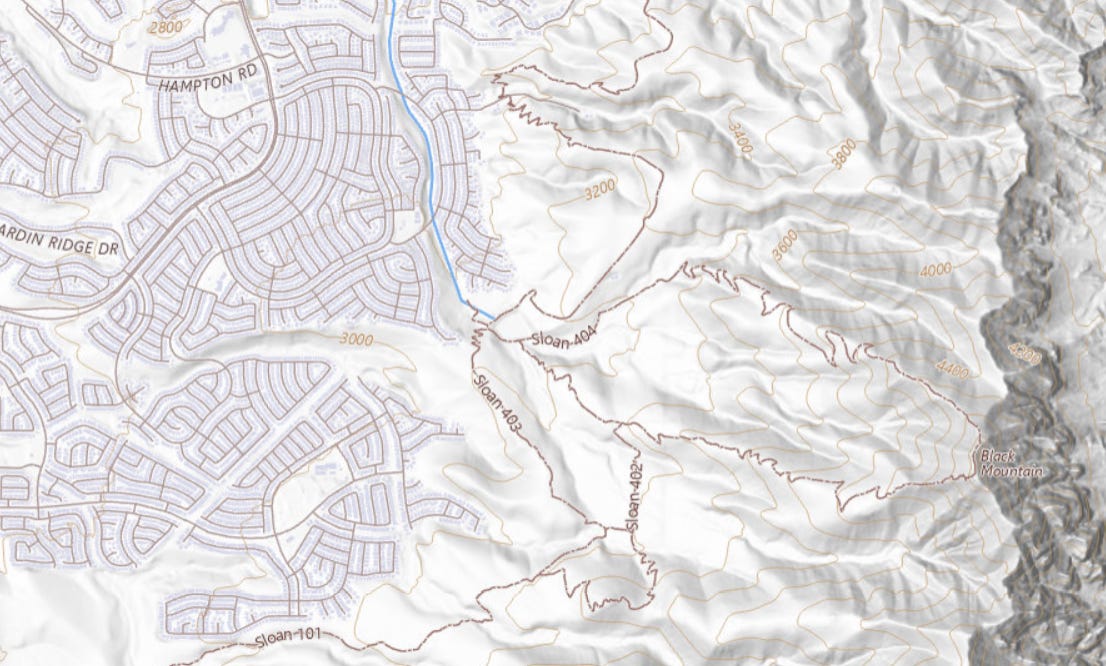
One thing I find interesting is that many of these higher-elevation neighborhoods are relatively new. I still remember visiting family in Henderson in the early 2020s. Many of the roads had already been built, but much of the surrounding land remained undeveloped. Today, many of those once-empty hillsides have become thriving communities.
Northwest Valley: Higher Ground Near Lone Mountain
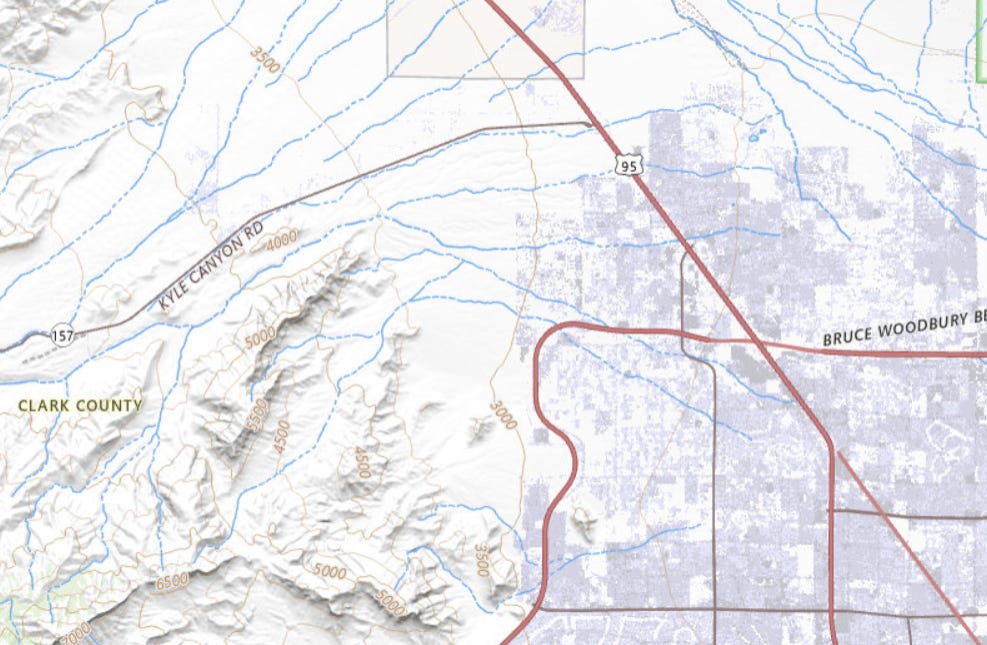
The Northwest Valley is home to Lone Mountain and Skye Canyon areas, with elevations generally ranging from 2,700 to 3,500 feet. Based on the average lapse rate, temperatures here can be expected to range from about 95°F to 98°F. While the difference may seem small, a few degrees can make outdoor activities noticeably more comfortable during the summer.
I first drove through this area in 2020. At the time, there was very little development around Skye Canyon. During my most recent visit, I was surprised by how much the community had grown as development continued toward Mount Charleston.
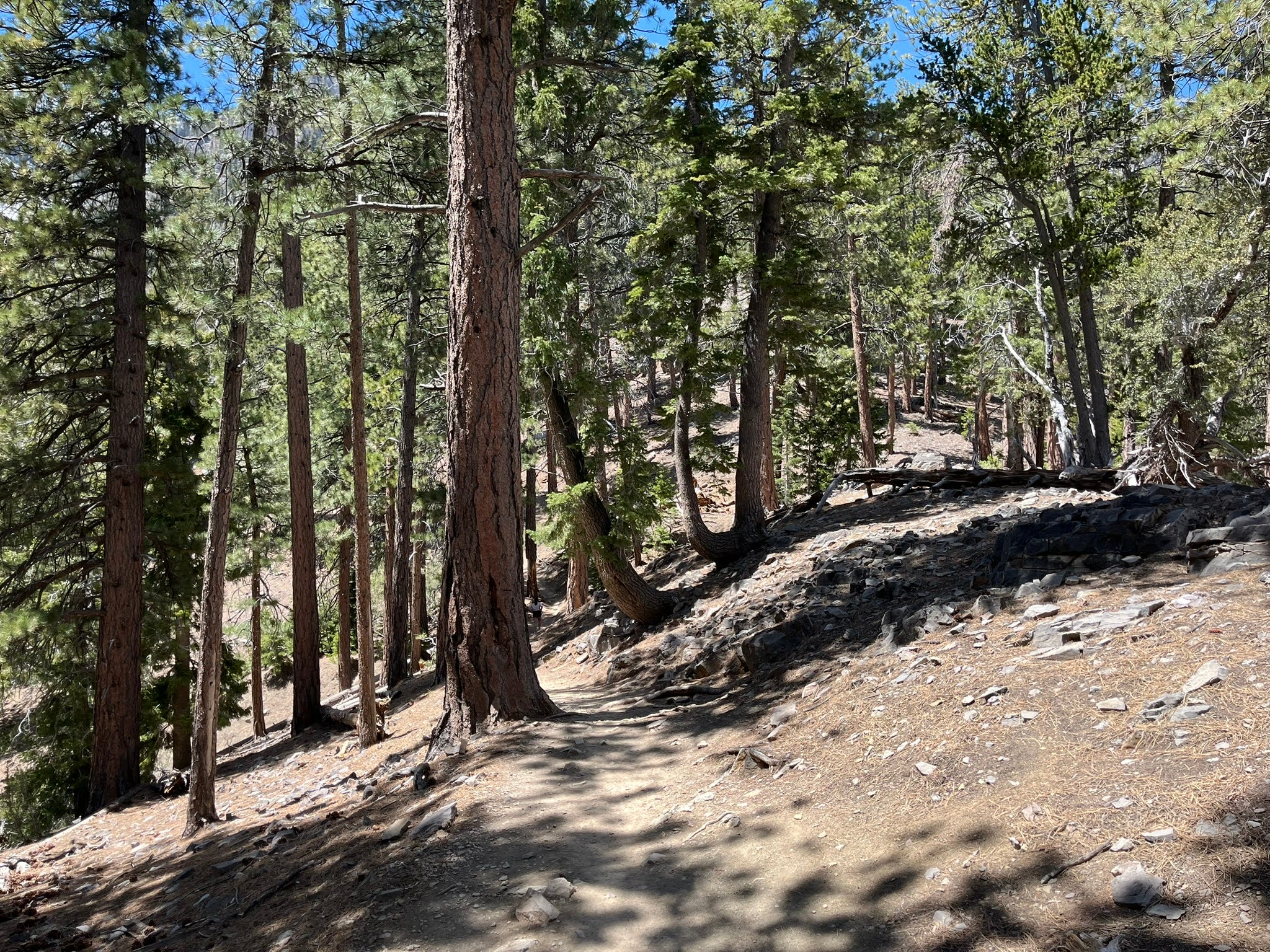
As you travel toward Mount Charleston via Kyle Canyon Rd, the landscape begins to change. The open desert gradually gives way to shrubs, small trees, and eventually pine forests. The change in vegetation is a visible reminder that elevation influences far more than temperature—it shapes the entire landscape.
One of the fascinating things about hiking in the Spring Mountains is how much difference the direction of a slope can make. In the Northern Hemisphere, north-facing slopes receive less direct sunlight than south-facing slopes. They tend to stay cooler, retain more moisture, and support denser vegetation. That’s one reason you’ll often find Ponderosa pines and other trees on north-facing slopes while nearby south-facing slopes remain much drier.
Summerlin West: The Highest Major Community in Las Vegas
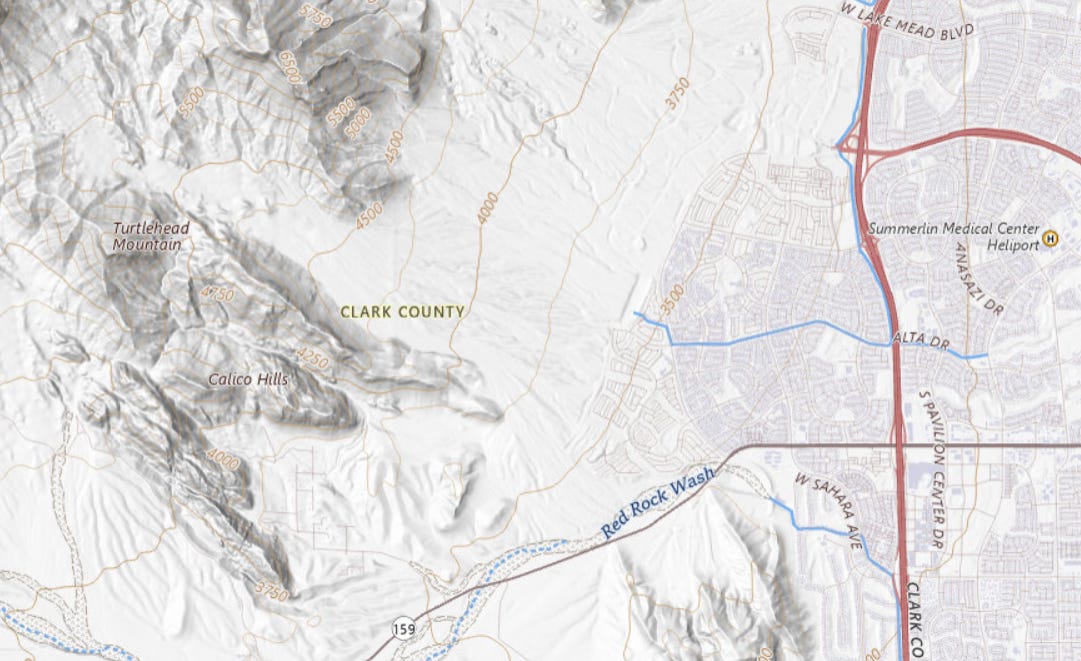
Summerlin is one of the largest master-planned communities in the Las Vegas Valley. It includes several villages, but Summerlin West stands out because of its higher elevations, generally ranging from 3,500 to over 4,000 feet. Assuming a temperature of 100°F on the Strip, temperatures here can be expected to range from about 93°F to 95°F.
During my visits to Las Vegas, Summerlin West consistently stood out to me. As you drive west toward Red Rock Canyon National Conservation Area, the neighborhoods gradually climb into the foothills. The higher elevation, combined with dramatic views of the surrounding mountains, gives this part of the valley a noticeably different feel.
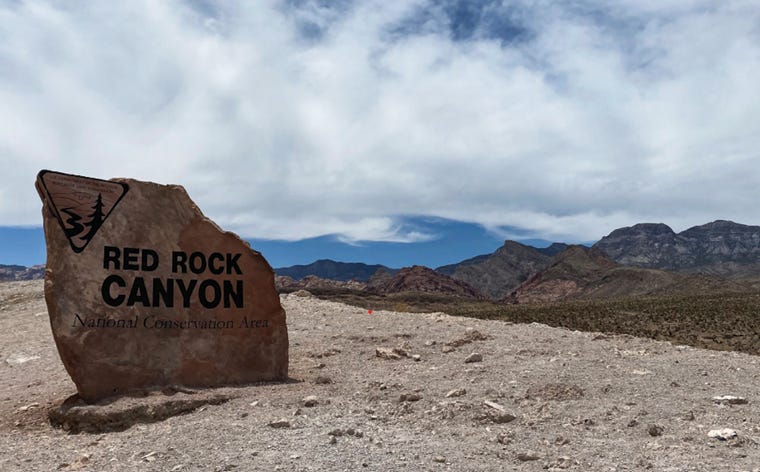
Based on the geography, Summerlin West is my top choice for those looking to minimize the summer heat. While no neighborhood in the Las Vegas Valley escapes the desert climate, Summerlin West offers the greatest elevation advantage of any major residential community. If hiking is part of your lifestyle, however, Skye Canyon deserves a close look. Sitting at the doorstep of Mount Charleston, it offers quick access to cooler temperatures, mountain trails, and forests of ponderosa pine.
Conclusion
I was not surprised that the Spring Mountains were cooler. Whenever I travel or hike, elevation is one of the first things I look at to estimate temperatures and trail conditions. That made me wonder: why not apply the same geographic principle to identify the coolest neighborhoods in the Las Vegas Valley?
After comparing the topographic maps, one pattern became clear: the highest neighborhoods are also the coolest. Henderson’s foothills, the Northwest Valley, and especially Summerlin West all benefit from this natural advantage. If I were choosing a home based on climate alone, Summerlin West would be my first choice.
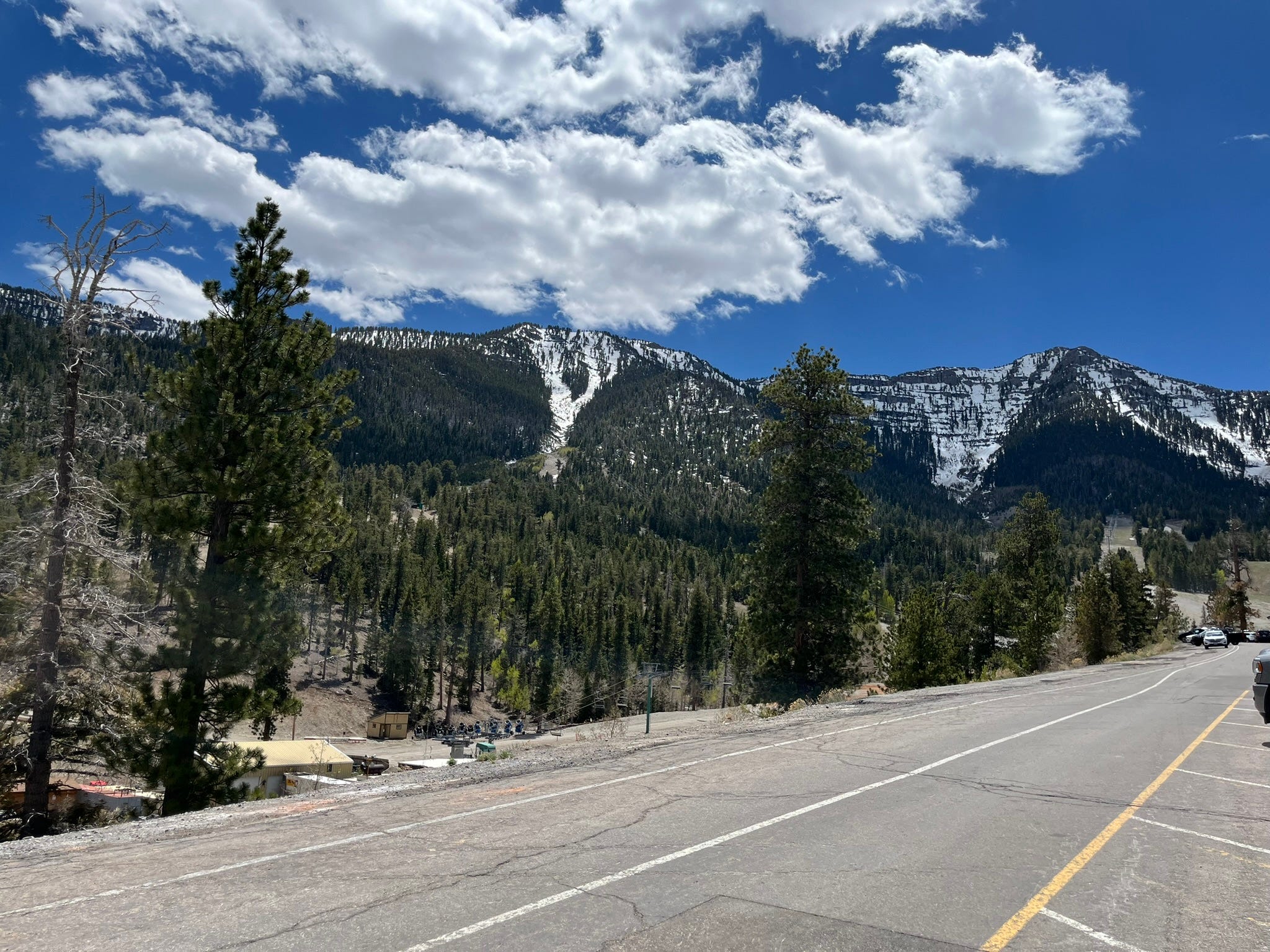
Before leaving Las Vegas, I made one last stop at Lee Canyon on the north side of the Spring Mountains. At an elevation of about 8,600 feet, the temperature display in the parking area read 77°F—about 23 degrees cooler than our 100°F baseline for the Strip. There was still snow on the ground, and towering ponderosa pines surrounded the trailhead. Just over an hour earlier, I had been standing in the Mojave Desert.
There is something refreshing about stepping into the crisp mountain air after leaving the desert behind. Sometimes the best way to enjoy Las Vegas isn't staying inside with the air conditioner running—it's simply living a little higher.
Disclaimer: The views expressed in this article are solely my own and do not reflect those of any public agency, employer, or affiliated organization. This blog aims to educate and empower readers through objective geographic and planning insights, fostering informed discussion on global and regional issues.