
Have you ever noticed how walking down some streets feels cozy and inviting, while others make you want to get away from them? Have you ever taken a detour to drive along a scenic byway simply because it is beautiful and because of how it makes you feel?
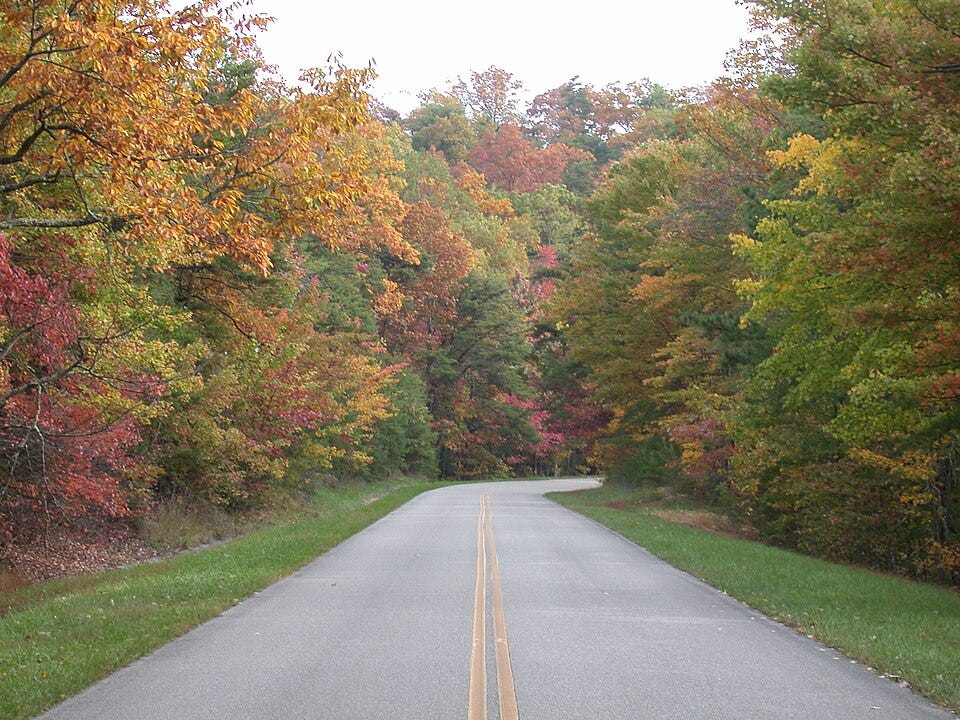
I have always been strongly affected by both the urban and natural environment. There are streets where I want to slow down, walk around, and spend more time. The same thing happens to me in nature. Driving along the Blue Ridge Parkway, the road itself becomes the destination. I enjoy it corner by corner, breathtaking vista after breathtaking vista, always wondering what is around the next bend.
Of course, how we experience a place is subjective. We all have our own preferences. We travel great distances and spend thousands of dollars visiting places like Paris, historic towns, or Disney’s Main Street. Perhaps part of what we are paying for is simply the experience of being in a beautiful place.
How we design our communities matters. The width of a street, the height and architecture of the buildings around it, the placement of trees, and even the amount of sky above us can shape how we experience a place. Some streets feel open and grand. Others feel cozy and sheltered. And sometimes, remarkably different places can make us feel surprisingly similar.
So what makes these places feel right?
For centuries, we have searched for proportions that create a sense of harmony. Perhaps none is more famous than the Golden Ratio, approximately 1.618:1. Writing in CNU’s Public Square, urban planner Will Selman explores how this ancient geometry may even have influenced L’Enfant’s plan for Washington, D.C.
But is there really one ideal proportion? Or can different proportions create different experiences? In the examples that follow, I’ll use width-to-height ratios to find out.
The Champs-Élysées: The Urban Design of Grand Boulevards
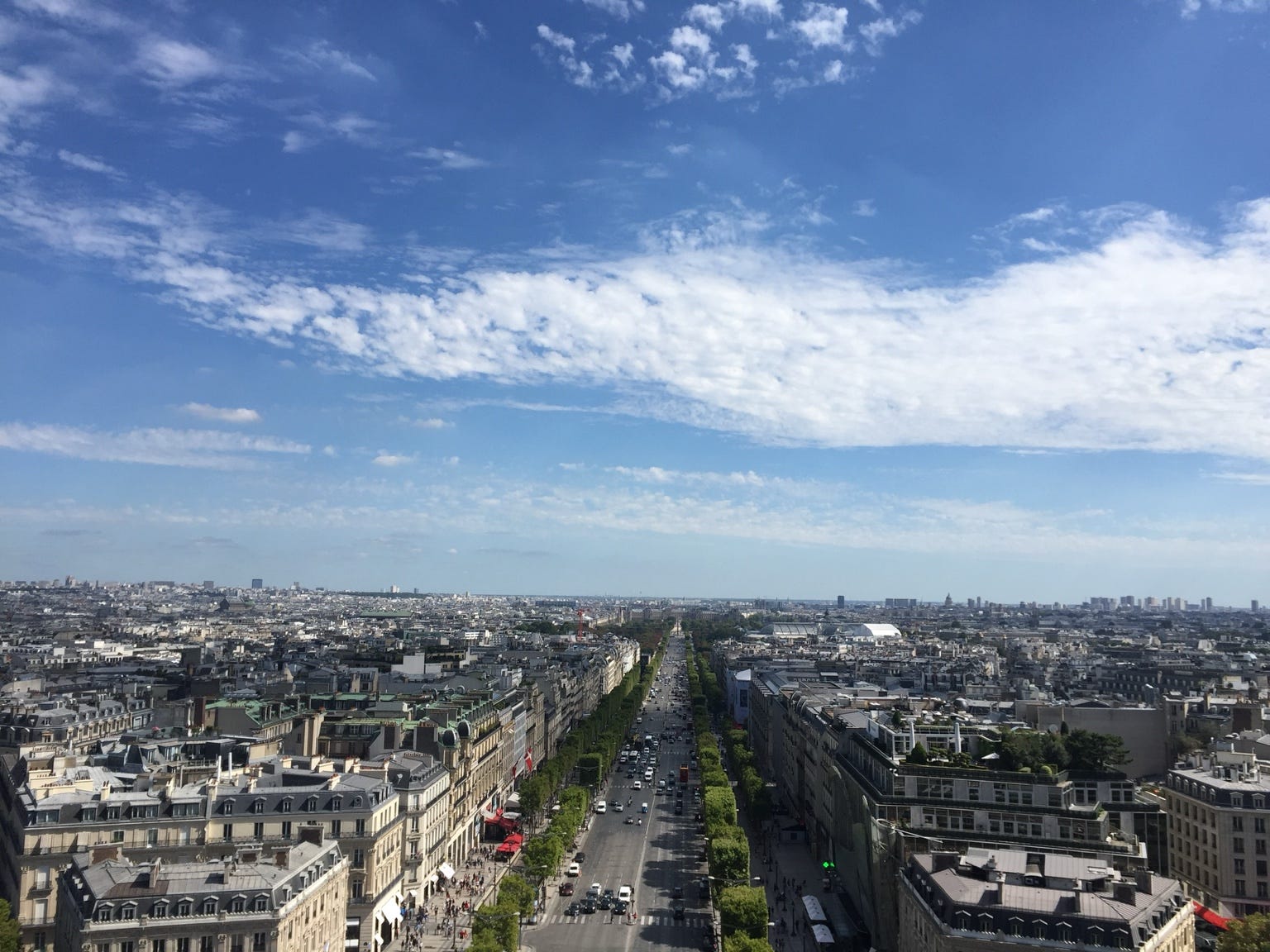
When I walked the Champs-Élysées, I remember being struck by just how wide the sidewalks felt. Looking at it again for this article, I measured the avenue using Google Maps and found something remarkable: the two sidewalk areas together appear to be wider than the street between the curbs—roughly 140 feet compared with about 85 feet. How often do you see that?
Those wide sidewalks provide room for trees, cafés, benches, and pedestrians. Rows of platanes—plane trees commonly seen throughout France—create a natural edge between pedestrians and traffic while also providing shade. What I remember most was how sheltered I felt from the cars. Despite standing along such a broad and busy avenue, the trees and generous sidewalks created a comfortable separation from the traffic.
The Champs-Élysées also carries multiple lanes of traffic in each direction, yet it does not feel like a typical sprawling commercial highway. The New Urbanism Best Practices Guide notes that the space between opposing power centers in sprawl can reach width-to-height ratios as high as 17:1 or even 22:1. Compared with the roughly 3:1 proportions of the Champs-Élysées, the difference is dramatic. The boulevard may be wide, but buildings, trees, and generous sidewalks still give the street clearly defined edges.
Disney’s Main Street, U.S.A.: Forced Perspective and Human-Scale Streets
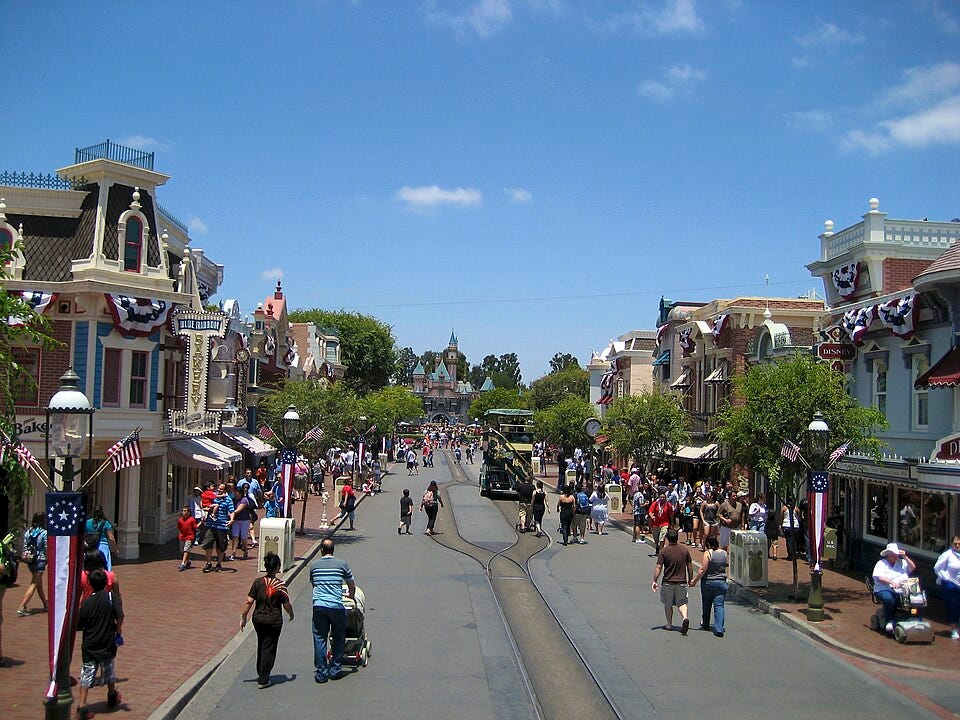

Then there is the magic of Disney’s Main Street, U.S.A. Of course, Main Street is not an ordinary street. It is part of a theme park and serves as the main gateway into the park itself. Yet that makes its design even more interesting. The street is relatively narrow and free from everyday automobile traffic, but people still tend to gravitate toward its edges. This was something I had noticed myself, but it took Ann Sussman’s work to make me think more deeply about why. After hearing Sussman speak at the CNU conference in Tampa in 2025, I had the opportunity to talk with her briefly and ordered her book, Cognitive Architecture, soon afterward. In it, she makes the same observation: “Disneyland’s Main Street is narrow, and just as Jane Jacobs noted, car-free; yet pedestrians head towards its side.”
Main Street also feels very different from the Champs-Élysées. The buildings are much closer together and form continuous walls on both sides, creating the feeling of an outdoor room. Based on its apparent proportions, Main Street seems to come surprisingly close to the 1.618:1 Golden Ratio. While the exact proportions vary with building height, the street appears to fall somewhere around a 1.5:1 to 2:1 width-to-height ratio.
Disney’s designers also use forced perspective. The upper floors become progressively smaller, making the buildings appear taller than they really are. To me, the result is a street that feels intimate and comfortable while still drawing my eyes toward the castle in the distance.
Monte Carlo and Zion National Park: The Architecture of Urban Canyons
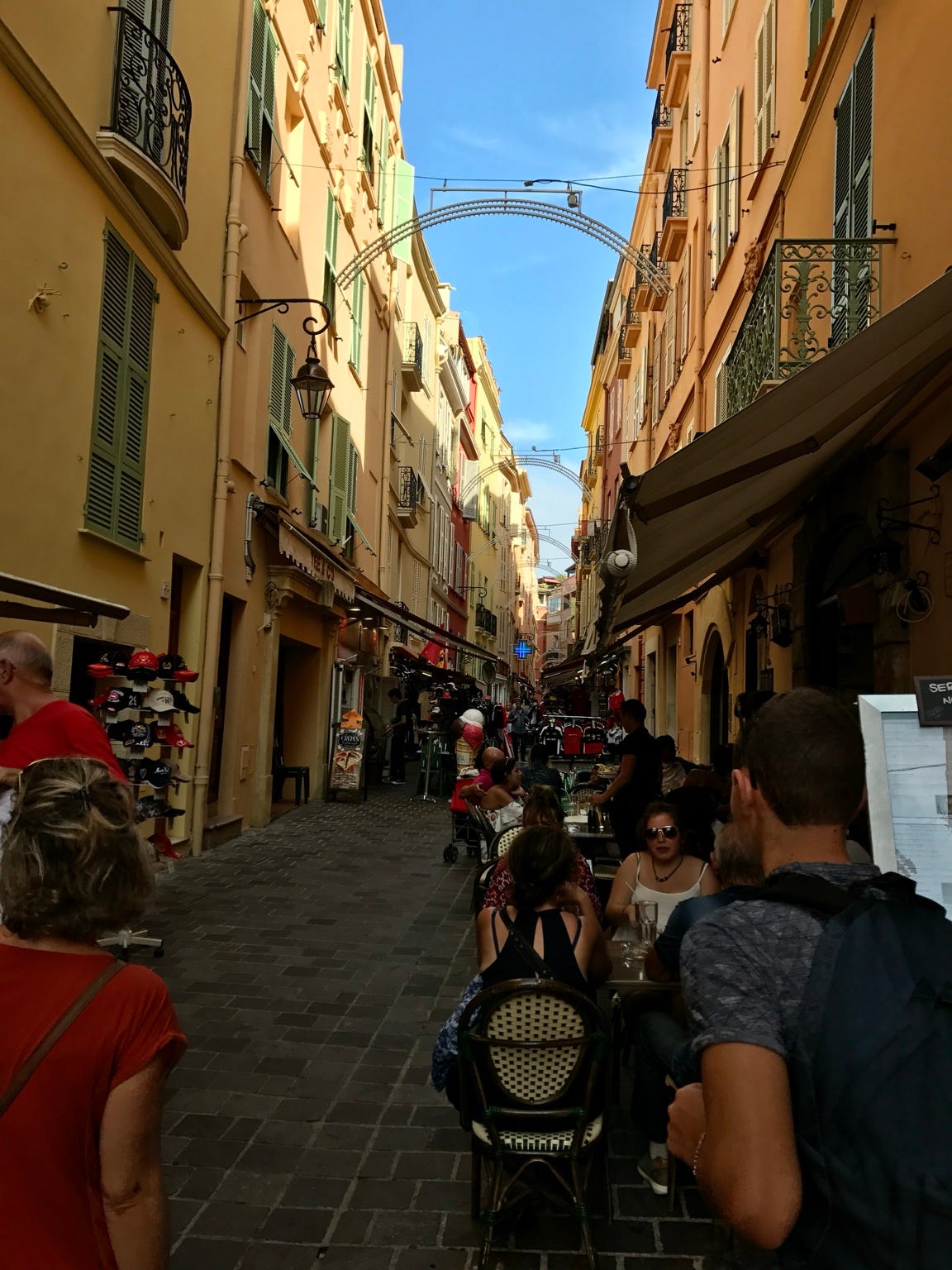
Having grown up in nearby Nice, France, I visited Monaco frequently and became very familiar with its streets. Some of the older streets are incredibly narrow, with buildings rising several stories on either side. Along some of them, the space appears to approach roughly a 1:2 to 1:3 width-to-height ratio, meaning the buildings may rise two to three times higher than the street is wide.
I enjoy walking through these urban canyons, but for me, they can also feel a little too enclosed. They are fun to explore for a while, but this is probably narrower than I would prefer for an everyday street. And that is part of what makes them interesting. There may not be one perfect proportion.
But these proportions also serve a purpose. On some of these narrow streets, I remember the sun reaching down between the buildings only briefly around the middle of the day. For much of the day, the buildings themselves provide shade, and storefront awnings offer even more shelter from the intense Mediterranean sun. This is vernacular urbanism—streets shaped over time by local climate, materials, culture, and everyday needs.
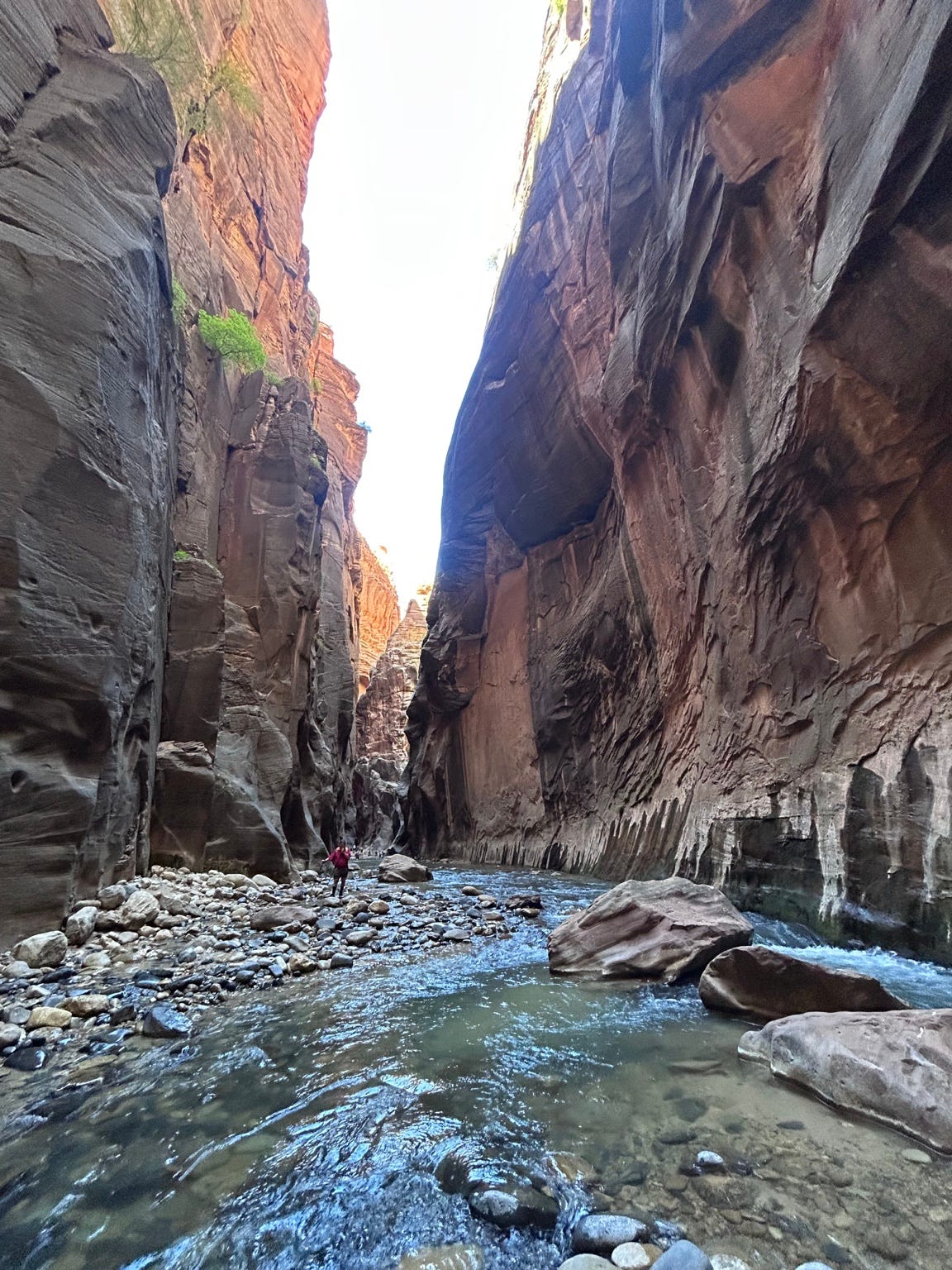
While hiking the Narrows at Zion National Park, I was struck by how similar the experience felt to walking the old streets of Monaco. We started on a day when the temperature approached 100 degrees, and at first the sun was beating down on us. But the farther upstream we went, the narrower the canyon became. The towering walls increasingly sheltered us from the sun, and as we went deeper, I remember the breeze becoming stronger and cooler.
Here, there are no buildings or awnings—just rock, water, shade, and a narrow ribbon of sky. The deeper I went, the more I experienced some of the same qualities I had felt in the urban canyons of Monaco. Nature had created its own canyon long before we created the urban one.
Look Around: Finding Human Scale in Our Own Backyard
We have traveled from the grand openness of the Champs-Élysées, to the comfortable enclosure of Main Street, U.S.A., and finally to the narrow streets of Monaco and the towering walls of Zion.
But we don’t have to travel thousands of miles to find great places. Disney recreated an idealized version of the American Main Street as the entrance to its theme parks.
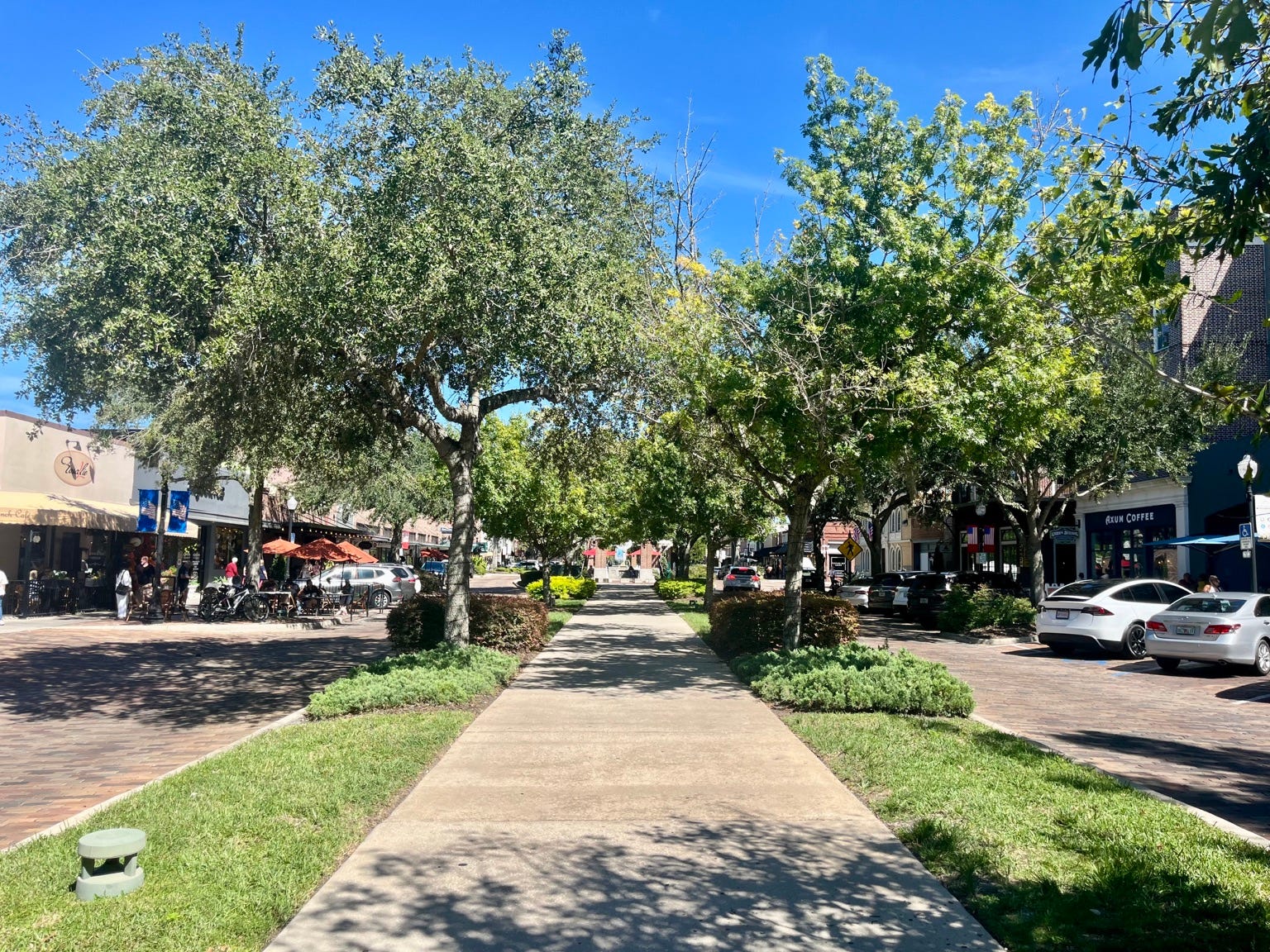
Yet just 15 miles north of Walt Disney World’s Magic Kingdom, downtown Winter Garden offers something different: a real Main Street that has evolved incrementally into a living, breathing place. Downtown Winter Garden has become a success story and a cultural hub for West Orange County, but it wasn’t always that way. Plant Street has transformed over the years into a place filled with restaurants, shops, events, and people simply enjoying downtown.
This one is especially personal for me. I spent more than 17 years working for the City of Winter Garden and had the opportunity to work alongside a dedicated team as the community transformed. What I love about Plant Street today is that it offers something I think many of us crave: a charming place where we can slow down, unwind, and dwell for a while. The distinctly Floridian architecture, mature live oaks, and West Orange Trail come together to create what feels to me like a serene little oasis of walkability within the larger sprawl of Orange County. Today, it is common to drive around town and see a simple bumper sticker: I Love Winter Garden.
As Jane Jacobs famously wrote in The Death and Life of Great American Cities, “If a city’s streets look interesting, the city looks interesting; if they look dull, the city looks dull.”
The next time you find yourself in a place that catches your attention, pause for a moment and ask yourself: How do I feel here? Am I in a hurry to move on, or do I want time to slow down? Do I want to linger, explore what is around the next corner, or simply dwell for a while? Sometimes our gut tells us something about a place long before we understand why.
Then look around. Look at the buildings, the trees, the sky, and the space around you. Perhaps there is more to that feeling than you first realized.
Disclaimer: The views expressed in this article are solely my own and do not reflect those of any public agency, employer, or affiliated organization. This blog aims to educate and empower readers through objective geographic and planning insights, fostering informed discussion on global and regional issues.