
Have you ever wondered why some cities seem financially healthy while others struggle to maintain roads, parks, and public services—despite asking residents to pay similar taxes and fees? One reason is that different land uses carry very different long-term fiscal impacts.
That’s also why planners place so much emphasis on creating a balanced mix of housing, employment, retail, and open space. Every land use generates revenue while also creating demand for public services. The long-term balance between the two can shape a community's fiscal health for decades.
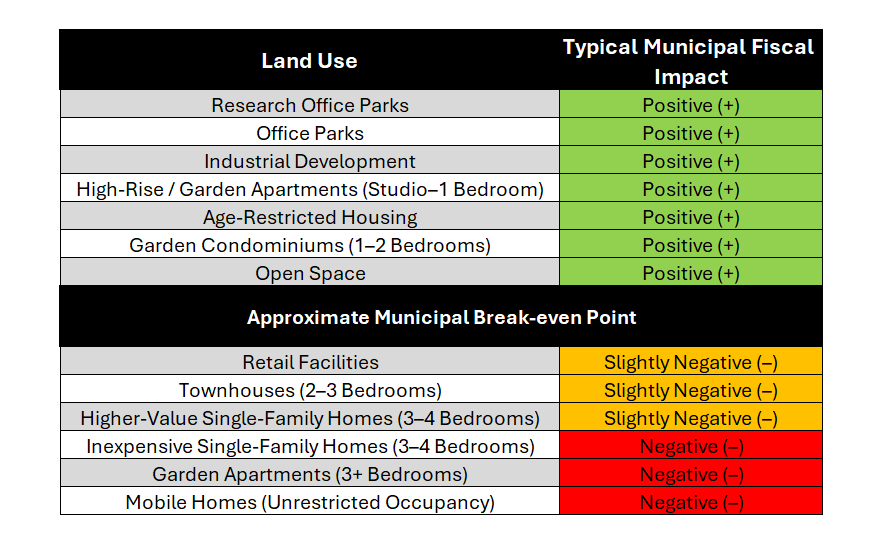
If the 1978 publication date caught your attention, it should. Burchell and Listokin’s work is foundational to modern fiscal impact analysis; later methods have refined the analysis, but their framework continues to influence how planners evaluate the fiscal effects of development.
What stands out?
The first thing I notice is that employment-oriented land uses—such as research parks, office parks, and industrial development—typically have positive fiscal impacts. These land uses often generate positive tax revenue while requiring relatively fewer municipal services.
Next comes the break-even range. Retail, townhouses, and many higher-value single-family homes often fall close to neutral. Whether they ultimately become a fiscal asset or liability depends on the community. Property values, local tax policy, service levels, and state law all influence the outcome.
For example, communities that rely heavily on residential property taxes may experience very different results than communities with a strong commercial and industrial tax base. As tax policies change, so do the long-term fiscal impacts of development.
Finally, notice that some housing types appear in the negative category. That doesn’t mean these neighborhoods shouldn’t exist. Every community needs attainable housing, workforce housing, and places for people at different stages of life. Businesses also need employees, and employees need homes they can afford. Looking only at fiscal yield misses the bigger picture.
The lesson isn't that planners and elected officials should maximize office parks or minimize housing. The lesson is to think about how different land uses work together.
Stepping Back: Seeing the Bigger Picture
One thing that the Fiscal Impact chart doesn’t show is that land uses don’t exist in isolation.
Fiscal impact analysis is an important planning tool—but like any tool, it becomes too blunt when viewed in isolation. Looking at each land use independently risks missing how communities actually function.
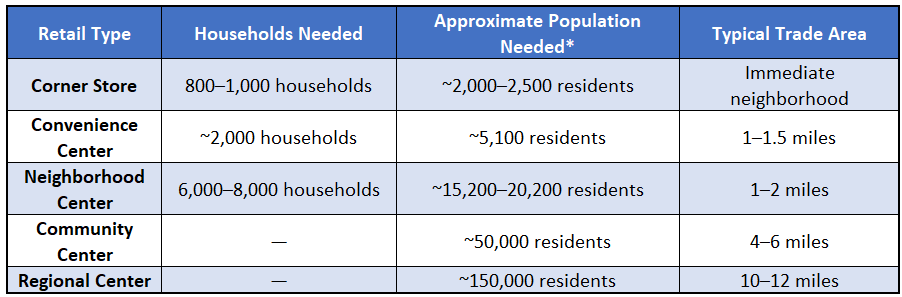
Take retail as an example. A neighborhood store depends on nearby households. Community shopping centers require even larger populations. Likewise, businesses need employees, employees need homes, and residents rely on jobs, parks, schools, and public services. Every land use supports another in some way. I explored this relationship in greater detail in my earlier article, How Much Retail Can Your Community Actually Support?, which examines how population and household thresholds influence retail development.
So what is the lesson? Should planners and elected officials simply optimize every acre for the highest fiscal return? I don't think so. Charles Marohn of Strong Towns captures this idea well: “The community must operate at a profit; its wealth must exceed its liabilities, and its revenues must consistently exceed its expenses.”
Fiscal resilience matters because every land use decision compounds over time. But planning isn't simply about optimizing a spreadsheet.
The challenge is to build communities that are both financially resilient and complete places to live. That requires looking beyond the fiscal performance of any single land use and understanding how the entire system works together.
Lesson from the Forest
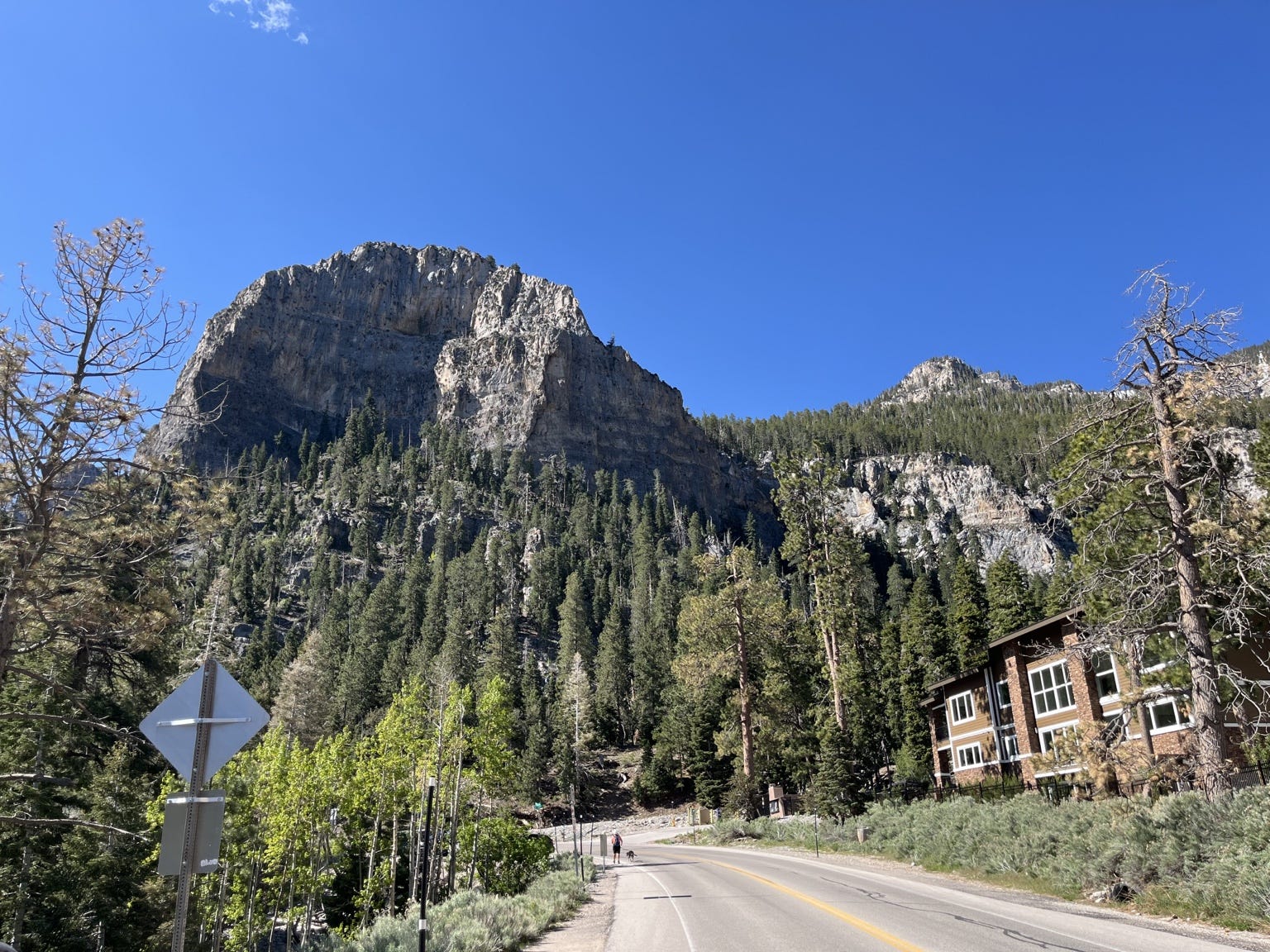
While hiking the Cathedral Rock Trail in the Spring Mountains outside Las Vegas, I stopped beside a young tree growing among much older ones.
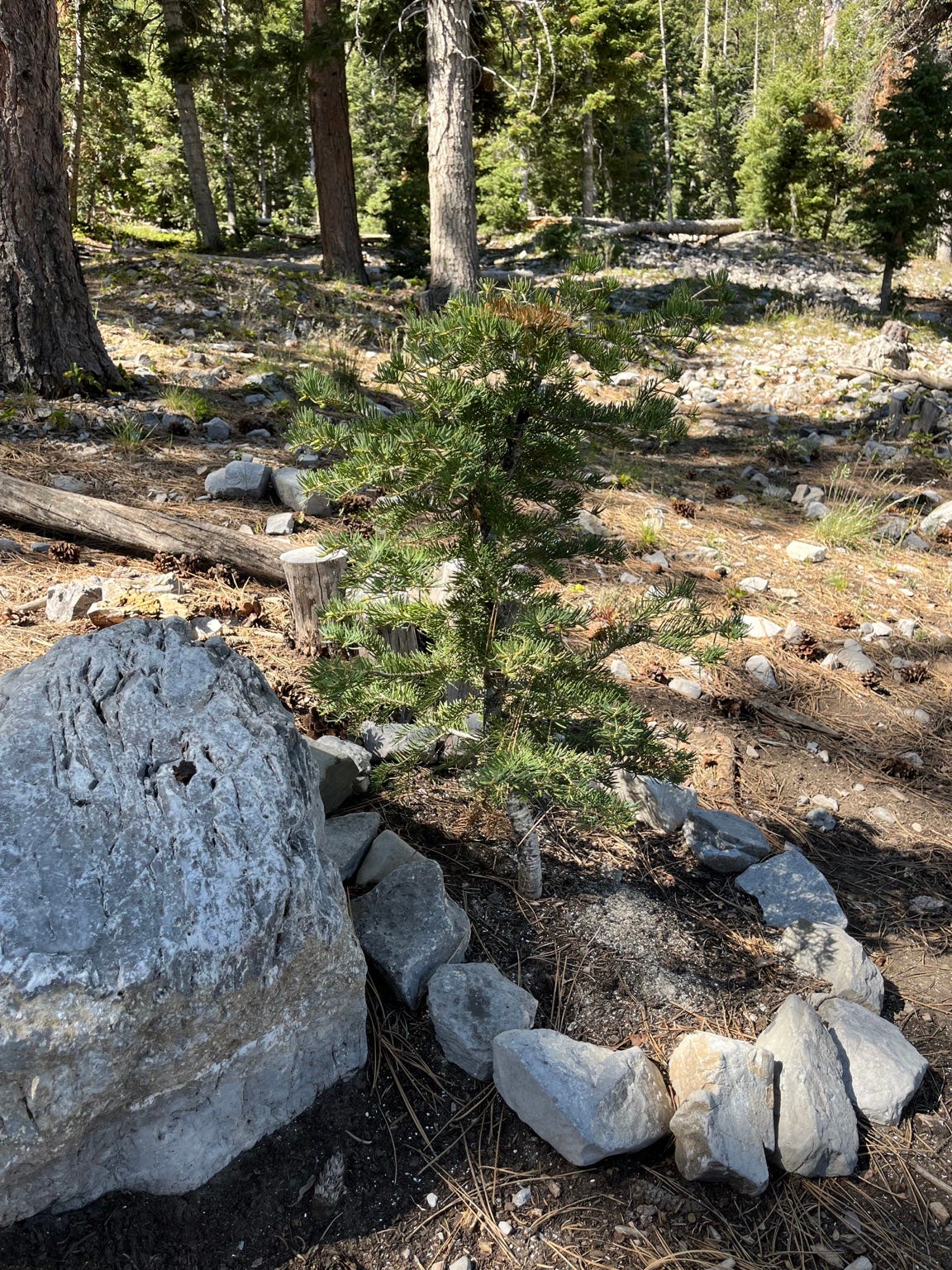
Healthy forests aren’t built from one species or one generation. They endure because different trees play different roles within the same ecosystem, over decades.
Cities are no different—except for one important distinction.
A forest doesn’t have to pay for roads, water systems, parks, or firefighters. A business can lose money for a few years, restructure, or even close its doors. A city doesn’t have that option. It must continue maintaining infrastructure, providing public services, and investing in the future—generation after generation.
That is why land use decisions matter.
Viewed one parcel at a time, the impacts may seem small. Viewed across thousands of acres and decades of growth, those decisions compound.
Developers routinely ask whether a project pencils out before they build. I think local governments should ask the same question—not just for the next budget cycle, but for the next generation.
Disclaimer: The views expressed here are solely my own and do not reflect those of any public agency, employer, or affiliated organization. It empowers readers with objective geographic and planning insights to encourage informed discussion on global and regional issues.